
Inside the Rossdale Power Plant
A look at the past and present of a River Valley icon as the city seeks pitches for the future
Paul Collis remembers a time when the Rossdale Power Plant was filled with steam, noise, and life.
"Rossdale was a family," Collis told Taproot, describing his job as "putting in time" instead of work. "I don't like that four-letter word with a W."
Nearly 40 km away from Rossdale sits the Edmonton Power Historical Foundation, a museum and archival centre in Leduc County that preserves the history of electricity in Edmonton. Collis, who worked at the plant for 30 years, is among the people who keep the foundation running and the memory of the plant alive.
Since the 1930s, the Rossdale Power Plant has been a landmark in the river valley. This was once the place that kept Edmonton's lights on, or, on at least one memorable occasion, needed some quick repairs to put them back on.
Collis, who worked as a power engineer, was there in 1973 when an explosion at Edmonton Power's Hardisty substation set off a chain reaction that blew out the transformers in Rossdale and knocked out the entire city's electricity for more than an hour.
"It was March the 17th, and I was at home, and I phoned down to the plant, and they said, 'Yeah, you get down here right now,'" Collis remembered. "So I spent my Saturday off down there, getting the lights back on."
Since the plant was decommissioned in 2012, it has sat gutted and empty.
In January, the City of Edmonton renewed its call for submissions for adaptive reuse of the building. Applications are open until April 30, and the decision-makers want to see a clear vision, secured funding, and a willingness to work with Indigenous communities.
Taproot went on a media tour of the facility in January, then asked Collis to share what used to be there.
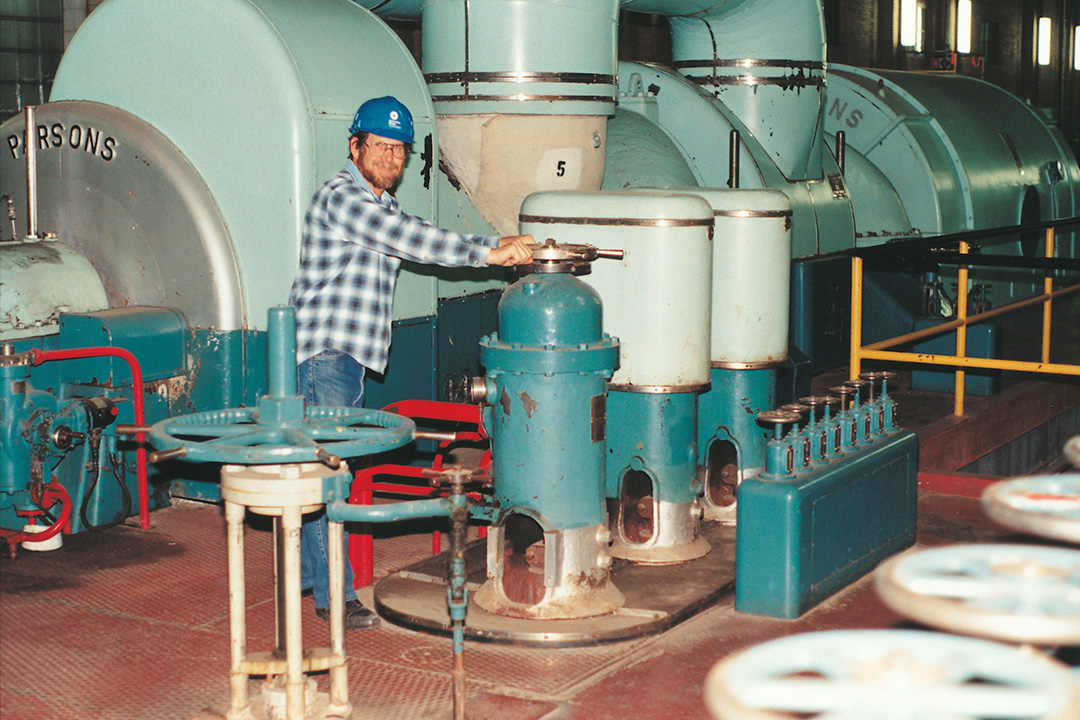
Paul Collis, seen here in the 1990s, spent many of his working days in the Rossdale Power Plant's turbine hall. (Edmonton Power Historical Foundation)
Just a handful of steam turbines within the plant once supported the entirety of the city's power grid. Roughly 400 PSI of pressurized steam would rotate blades in the turbines, creating electricity.
Now, the turbine hall is nearly empty. All of the heavy equipment was stripped from the plant after it ceased making power in 2008.
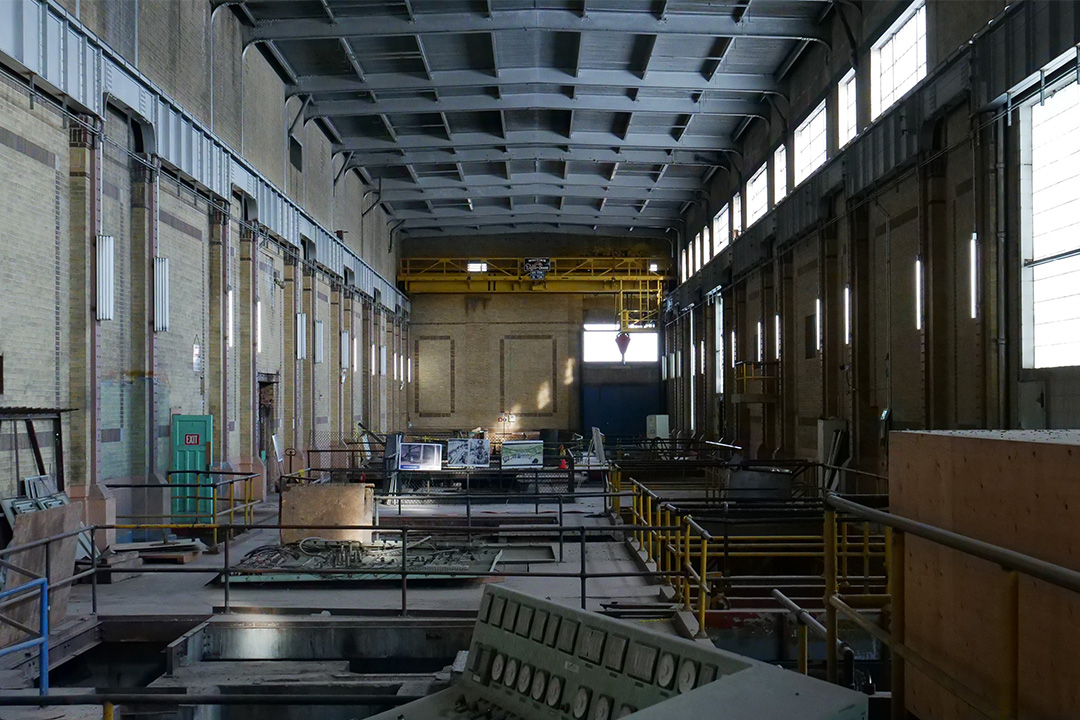
The plant's turbine room has only switchboards left in it. (Sara Sheydwasser)
Collis pointed out the room's aesthetic appeal, including designs in the brickwork and the arched steel support for the crane.
"It's done for architectural reasons," he said. "It doesn't make it any stronger or any better."
Neighbouring the turbine hall is the boiler room, an equally large and now empty space.
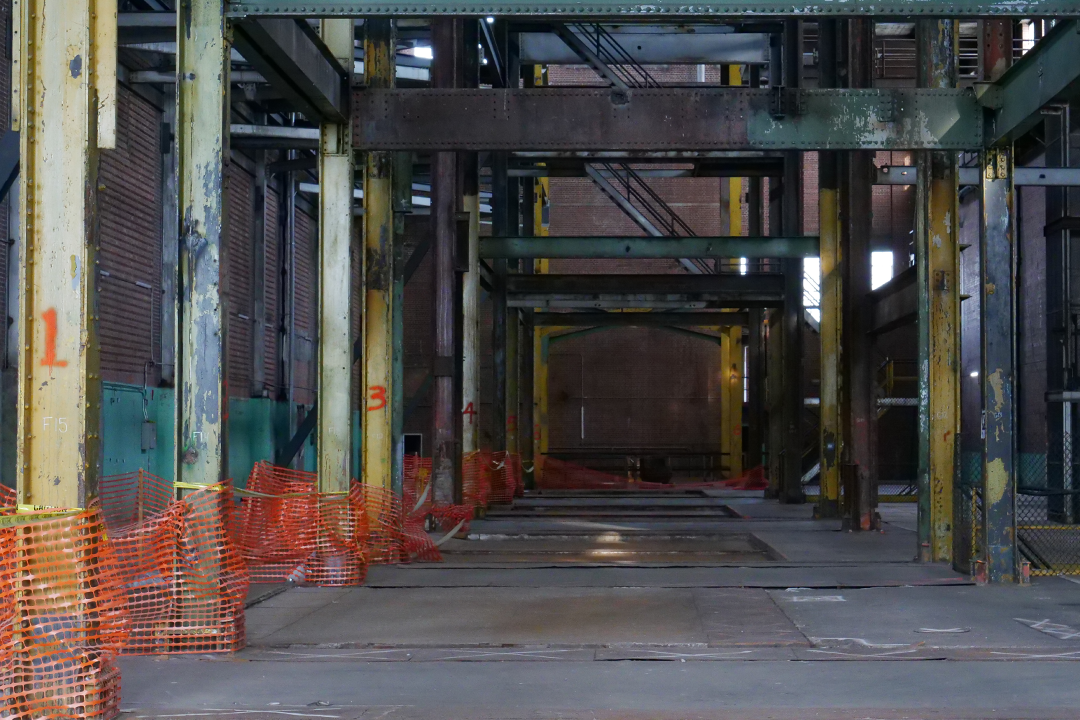
Another big space in the plant is the boiler hall. (Sara Sheydwasser)
With its first phase being finished in 1932, the boiler room once housed seven boilers. Six boilers were built for coal, and one was built later for natural gas, once the plant switched over to that energy source in the 1980s.
When the plant was still coal-powered, coal would be delivered by rail on the west side of the building. It would then be carried by coal-handling equipment, sent through a sorter at the top, and fed into a boiler's furnace.
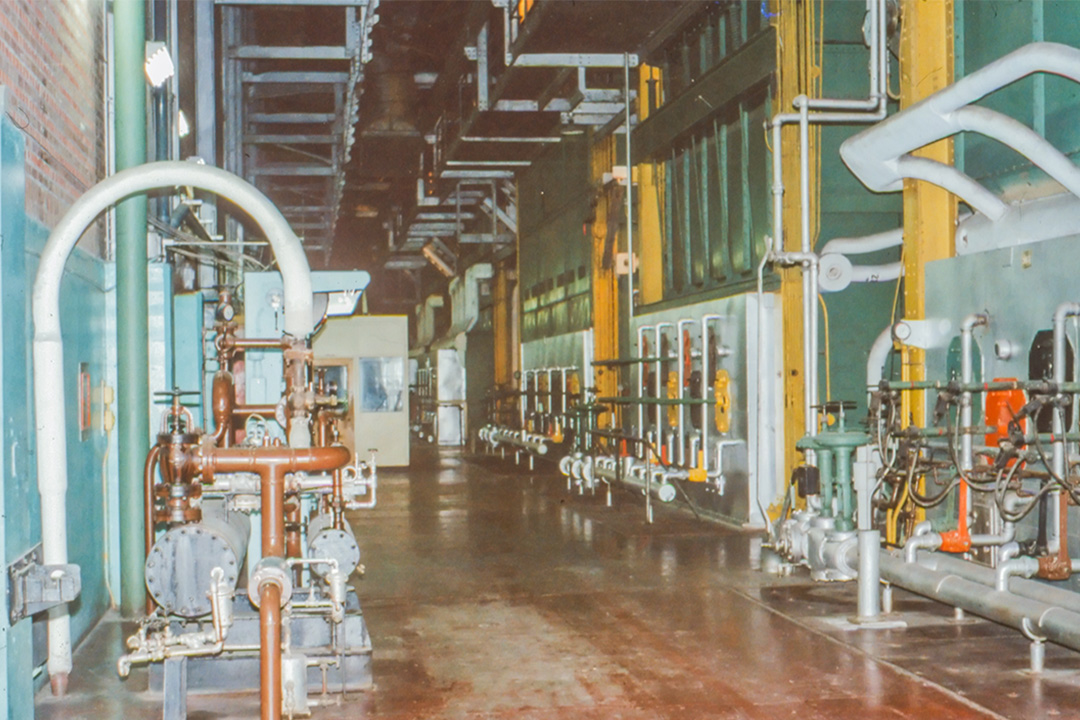
The boiler hall as it looked circa 1994, when it was still in operation. (Edmonton Power Historical Foundation)
Since boilers operate at very high heat, they constantly and unevenly expand and contract. Because of this, the boilers could not be placed on the ground and were hung from steel frames lining the boiler hall. The steam produced from the burning coal was directed out of the plant's iconic smokestacks, one for each boiler.
While all of this equipment was demolished or sold, there is one remaining area where heavy machinery is still intact.
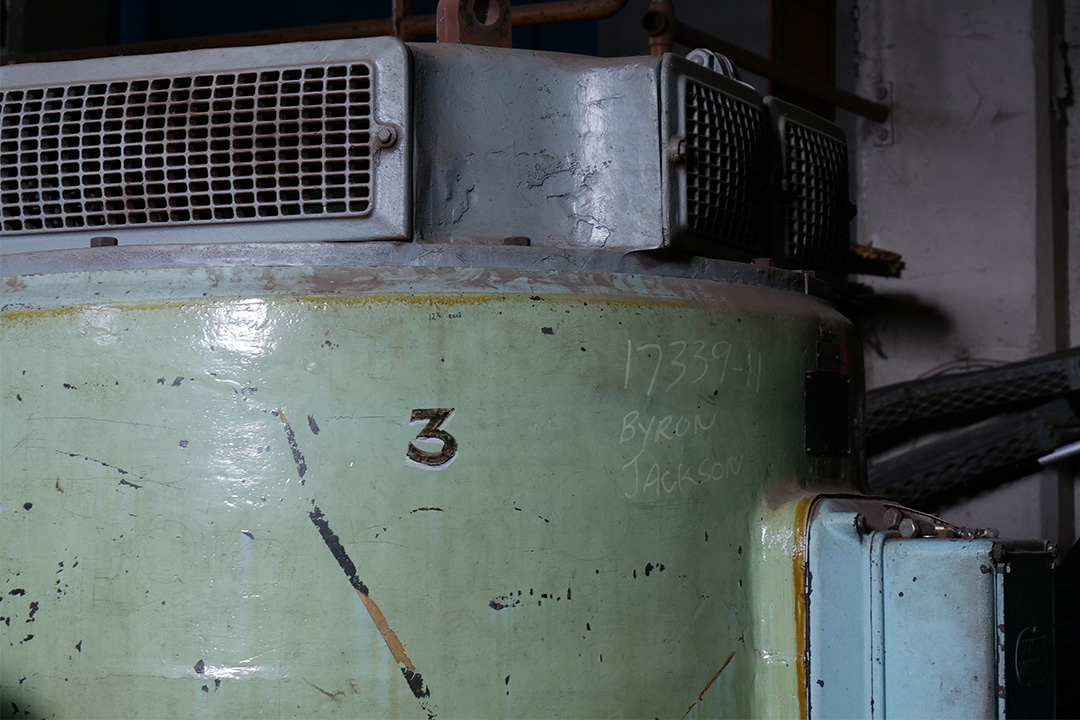
The motors in Pumphouse #1 are some the last machinery in Rossdale. (Sara Sheydwasser)
Pumphouse #1, built in 1937, was one of the first structures to be finished. The pumphouse is still home to motors, used to push water through pumps and into the rest of the plant.
"I did spend several hours ... down there," Collis recounted.
During the January tour, city representatives Avril McCalla and David Johnston voiced a need to keep the pumphouse as untouched as possible.
"With industrial heritage sites, one of the more important aspects of them is the processes that went on in the building," Johnston said. "It would be an important part of interpretation of this broader site to keep this space more intact."
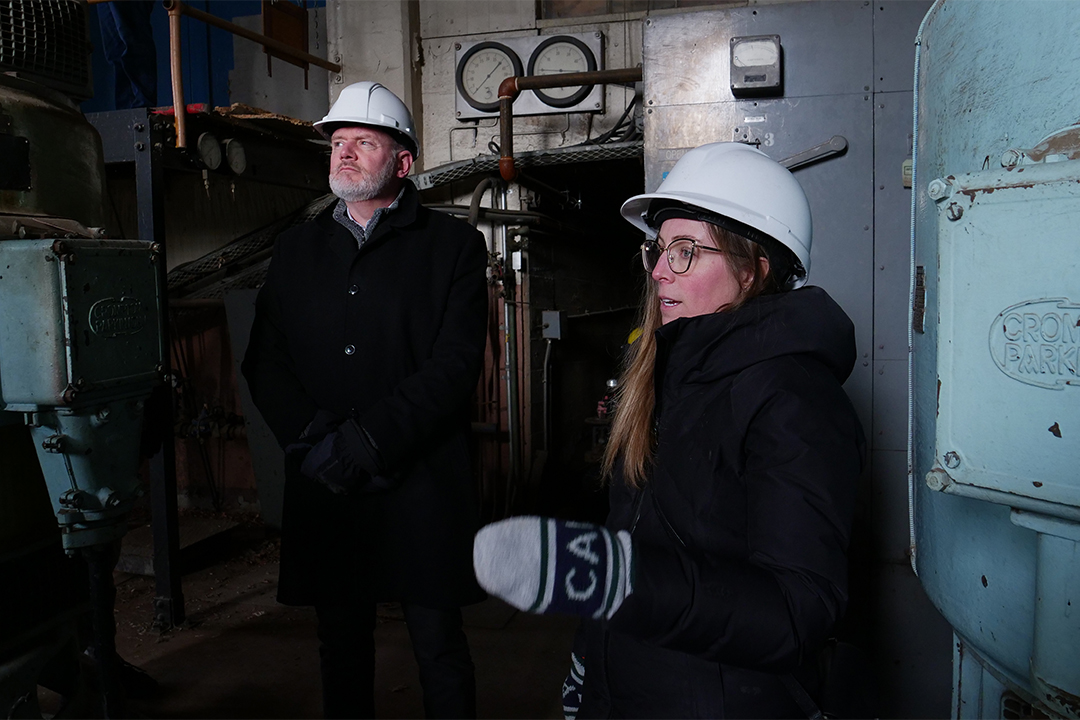
Avril McCalla, who leads the River Crossing Project, and principal heritage planner David Johnston, led journalists through the decommissioned Rossdale Power Plant on Jan. 23, 2026. (Sara Sheydwasser)
Neither McCalla nor Johnston were eager to share their personal visions for the project.
"I think that there's so many creative people out there that we're going to end up with something really interesting, and I don't want to taint that with my ideas," McCalla said.
As for Collis, he just wants the building to stay a fixture in our river valley.
"Hopefully, they will save what is there," he said. "I would hope that they would have public tours."
Collis, whose museum reopens for the season in April, would be happy to help train tour guides so they can educate the public about one of Edmonton's most identifiable ties to the past. But he made it clear he's not looking for a job. That sounds a little too much like that four-letter word that starts with a W.
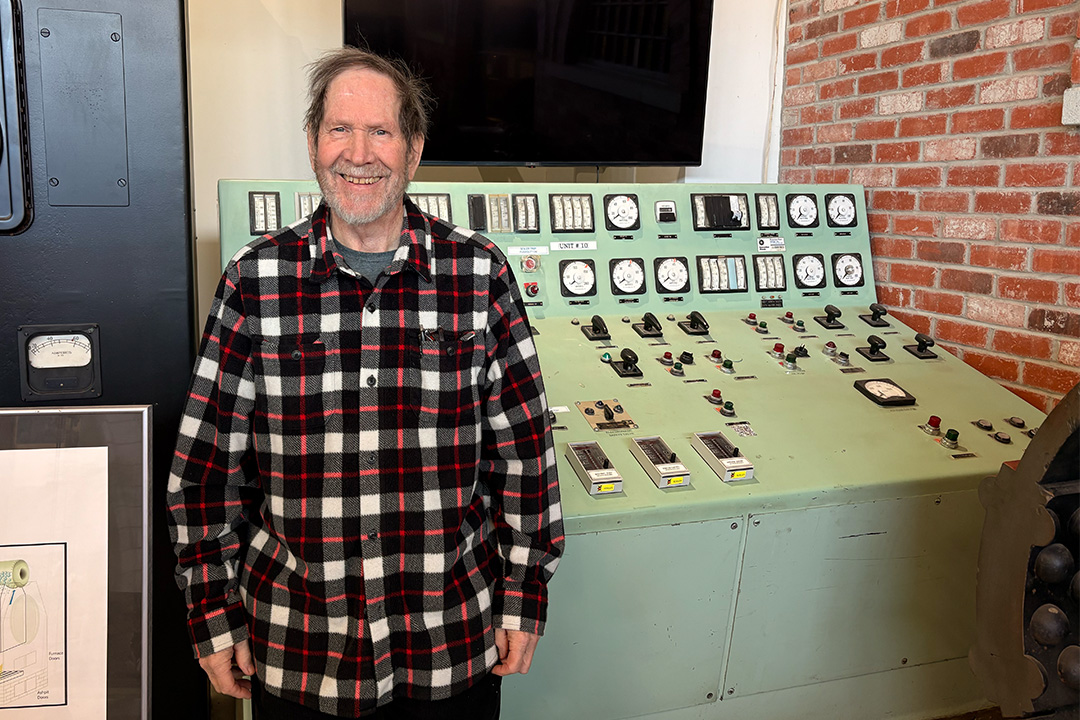
Paul Collis now keeps Rossdale's memory alive at the Edmonton Power Historical Foundation, where this switchboard from the plant is an artifact. (Sara Sheydwasser)

Share