
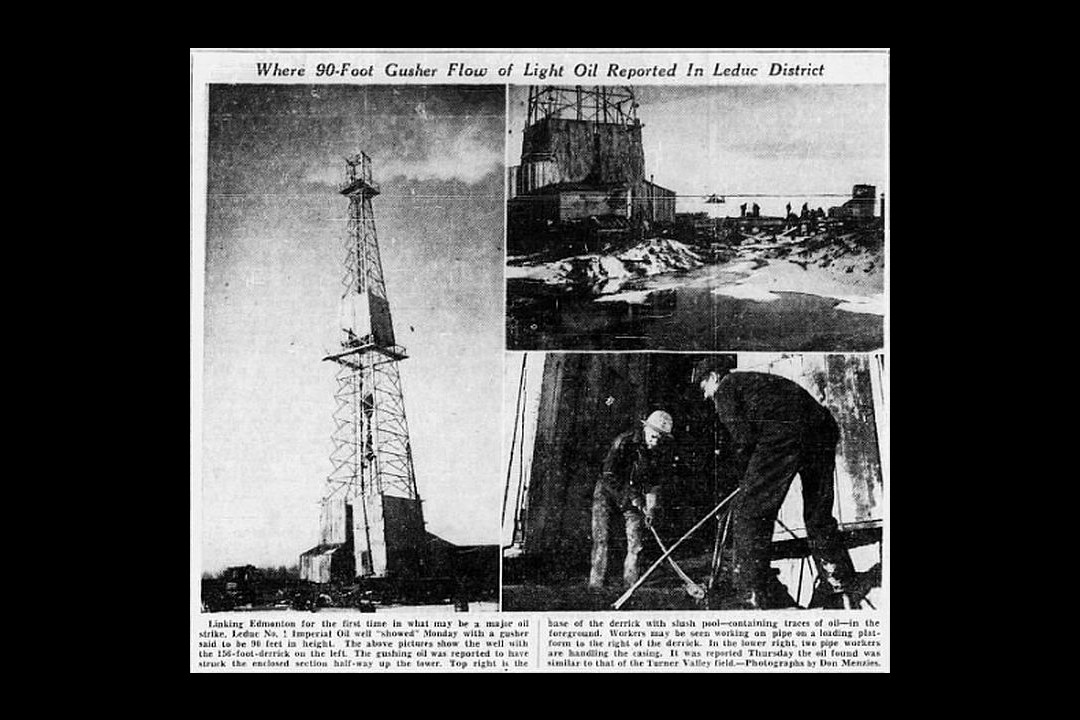
A moment in history: Feb. 6, 1947
By Scott Lilwall
On this day in 1947, there were hints of an oil discovery that would forever change Edmonton and Alberta as a whole.
People have been making use of Alberta's oil reserves for centuries. Indigenous peoples collected bitumen that bubbled up out of the ground, using it to waterproof canoes. Mentions of the oilsands were made by European settlers as far back as 1778. In the early 20th century, a few petroleum discoveries inspired a couple of small oil booms. Alberta's first major oilfield was in Turner Valley, which began production in 1914 and would provide 90% of the oil Canada used during the First World War. But at the time, no one was aware of the vast, untapped reserves hidden deep under the soil.
That would change with Leduc No. 1. The oil well, located on a farm outside of Devon, was a long shot. It was one of the final wells planned by Imperial Oil, which had put millions of dollars into exploratory drills in Alberta. Up until that point, the search had been a disaster. The company was on a losing streak, drilling 133 dry holes. Leduc No. 1 was one of half a dozen last-chance attempts before giving up.
On Feb. 3, testing produced traces of oil, according to newspaper accounts at the time. But even with that little to go on, there was excitement, with the story suggesting the well might link "Edmonton for the first time in what might be a major oil strike."

Those hopes would be realized a week later. On the afternoon of Feb. 13, a gusher of mud and water erupted from the derrick. Soon, the mud gave way to what the drillers had been hoping to find: oil.
Leduc No. 1 was just one well, but it was also a signal that there was far more to be discovered than previously thought. It kicked off a flood of new explorations and investment, which led to more successful wells and changed the future of the province. Before the Leduc discovery, Canada was producing very little of its own oil, importing 90% of its consumption from the United States. A decade after Leduc, that had changed, with the country producing 65% of what it needed, the vast majority of it coming from the new western Canadian wells kicked off by the Leduc discovery.
Not surprisingly, it had a massive impact on Edmonton. More wells were drilled in the area, and those wells needed workers. The oil boom fuelled the city's population boom. It also led to an influx of new businesses providing services to the oil industry, adding to the blue-collar fabric that remains part of Edmonton to this day. The economic impact has also made it challenging to diversify beyond fossil fuels, despite what we know about their contributions to climate change.
Leduc No. 1 would operate for more than 20 years before ceasing operation in 1974. While no longer in operation, the equipment remains, and the well was deemed a national historic site in 1986 for the impact it had on Canada's oil industry. Beside the site is the Canadian Energy Museum, which holds more artifacts from early oil exploration in Alberta. The museum, which has been closed to the public since November, is scheduled to reopen later this spring. Almost 80 years after Leduc No. 1's first gusher, oil booms and busts continue to shape us. In the last year, the industry saw a sharp rise in production, while at the same time cutting 10,000 jobs.
This clipping was found on Vintage Edmonton, a daily look at Edmonton's history from armchair archivist Rev Recluse of Vintage Edmonton.
Share