
The Pulse
March 19, 2026
Here's what you need to know about Edmonton today.
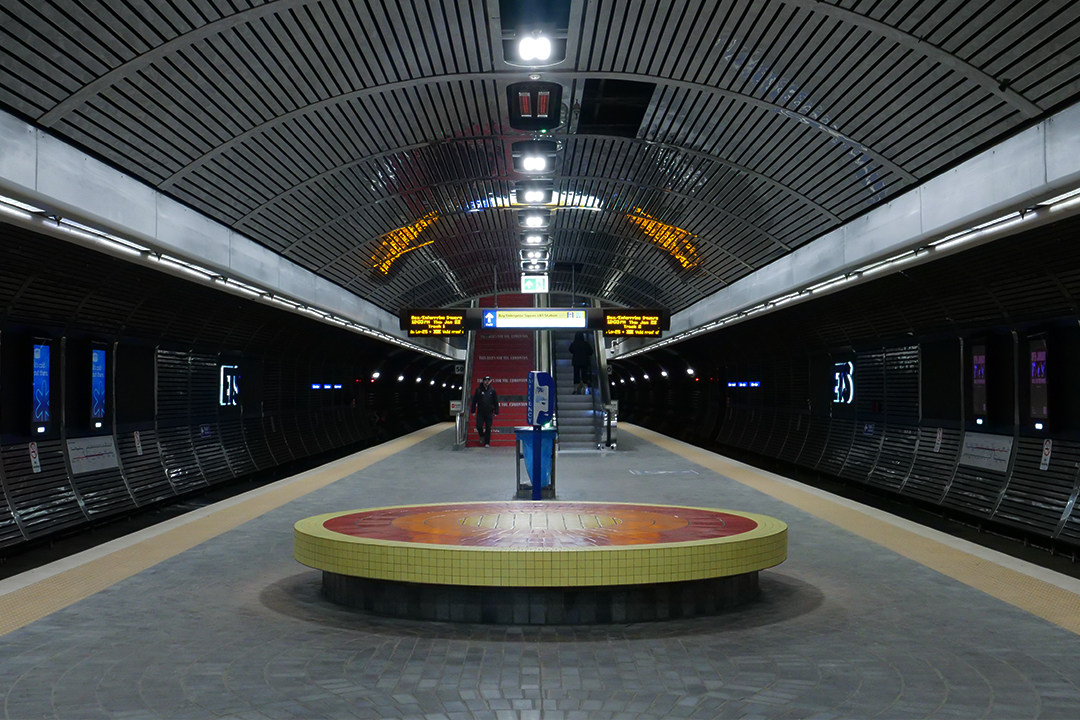
ETS 'eager to learn' when it comes to accessibility
Accessibility on transit is improving for Edmontonians who are blind and partially sighted, but there's still work to be done, says an advocate with CNIB.
"If you are blind or low-vision, you don't get to drive," said Taylor Bauer, the program lead for awareness and community outreach in CNIB's Edmonton office. "We rely on transportation to live normal lives because we live normal lives."
CNIB's Get on Board campaign, an advocacy program for transit accessibility across the country, has been active in Edmonton since 2023, gathering insights from the community and conveying information to ETS about barriers.
"Everybody has different needs and each transit ecosystem is a little bit different," Bauer told Taproot. "I really appreciate how ETS is very eager to learn, willing to learn. They wanted to be a part of it."
The Get on Board program took ETS management and CNIB members with varying levels of sight loss on a ride-along encompassing an entire trip from someone's front door to their destination. "We did the whole transit experience," Bauer said.
Following the ride-along and a secret rider survey, CNIB and ETS hosted a town hall to share the findings.
"From there, I provided recommendations for change," Bauer said, noting that ETS branch manager Carrie Hotton-MacDonald had her own suggestions. "(She) raised her hand and came up with a whole list, that was much longer, of all these awesome things that they want to start working on to make transit more accessible."
In a recent interview with Taproot, Hotton-MacDonald mentioned making a slight change to how buses display their route numbers based on feedback from CNIB. Now, on the side panel on a bus, the message just displays the bus route number and the destination, rather than scrolling through messages such as "Parking Ban In Effect" or "Let's Go Oilers" as the front display does. This makes it easier for low-vision riders to know if they're getting on the right bus.
"That's personally really important to me, just knowing that we were listening directly to riders," Hotton-MacDonald said regarding the CNIB consultation. She added that as older buses are replaced, it will be possible to have higher-contrast destination signs.
Headlines: March 19, 2026
- Edmonton city council voted to maintain new patio fees for bars and restaurants, rejecting a motion by Coun. Karen Principe to reconsider the charges. Business owners, including Flavius Joita of Birdog on 104 Street, expressed concern about the potential costs, which could reach $7,000 for a year-long patio licence. Joita highlighted increasing business expenses and the impact of nearby Valley Line West LRT construction on 102 Avenue. Mayor Andrew Knack said the fees are intended to offset property tax increases.
- Edmonton is launching the Attainable Housing Incentive, a 10-year tax rebate program to increase downtown residential density. Applications open later this month. The incentive is expected to help add up to 850 attainable units and 3,400 total units. The City has set a downtown population target of 24,000 by 2030.
- Lawyers for Edmonton Police Service Chief Warren Driechel are challenging a decision by the Alberta Human Rights Tribunal that found two Black men, Yousef John and Caesar Judianga, were victims of racial discrimination. In 2017, the men were pepper sprayed and arrested by Edmonton police after reporting a crime. The tribunal's 2024 ruling awarded them $80,000. During a judicial review heard in Edmonton on March 18, police lawyers argued that the tribunal's finding of "implicit bias" was based on general evidence and judged officers' actions using hindsight.
- The City of Edmonton's Coronation Eco Station will close for an expansion project starting March 31. It will be the first major upgrade since 2000, aiming to improve traffic flow, expand the existing building, increase waste drop-off bins, and install solar and energy-efficient systems. During the closure, Edmonton residents can use other Eco Stations, including Ambleside, Kennedale, and Strathcona. The Coronation location is expected to reopen in spring 2027.
- Postmedia columnist Keith Gerein argues in his latest column that Chief Warren Driechel's trip to Israel has reignited political tensions around the Edmonton Police Service after a relatively calm year, and may not have been worth the backlash. While Gerein acknowledged police leaders can benefit from international collaboration on complex public safety issues, he wrote that the chief should have more carefully weighed the trip's public value against its predictable effect on community trust, particularly among Muslim residents. Gerein called for clearer explanations from Driechel and the Edmonton Police Commission about the purpose and approval of the trip.
- The Edmonton Police Service is investigating after a family in the Secord neighbourhood found a loaded handgun near a pond on March 11. A father and daughter discovered the weapon under a blue rag. Investigators released security footage from March 8 showing a man exiting a white car with a blue rag, and are asking Secord residents to review dashcam and security footage from March 8 from 5am to 6am.
- The Alberta government introduced new legislation to restrict medical assistance in dying (MAID). Premier Danielle Smith and Justice Minister Mickey Amery said the bill would prohibit MAID for those with mental illness as their sole underlying condition and limit access to people whose natural death is expected within 12 months. This would effectively block the federal expansion of MAID to include mental illness, set for March 17, 2027. Smith said the government is prepared to defend the bill, potentially using the notwithstanding clause.
Happenings: March 19, 2026
Here are some events happening today in the Edmonton area.
- Edmonton Region Research and Commercialization Day starting at 8:30am at Edmonton Unlimited
- Solar Sales: How to Do Right by Customers starting at 9:30am online
- Entrepreneur Forum For Newcomers in Alberta starting at 11am at Edmonton Convention Centre
- AWE Connect Event & Celebration starting at 4pm at LAST Modern Event Venue
- Perfecting Your Pitch starting at 5:30pm online
- 2026 State of the Region starting at 6pm at Heritage Park Hall
- Sales Management Bootcamp Part 1 starting at 6pm at Edmonton Unlimited
- Reception + Artist Talk: Ephemeral Language / Langue éphémère starting at 6pm at Art Gallery of St. Albert
- Talk & Tour starting at 6pm at Royal Alberta Museum
- Florida Panthers at Edmonton Oilers starting at 7pm at Rogers Place
- SCAN! Edmonton - Seniors for Climate Action Now starting at 7pm online
- Edmonton Boat and Sportsmen's Show at Edmonton EXPO Centre (until March 22)
And here are some upcoming events to keep in mind:
- April 1: My Place is Here at Garneau Theatre
- April 8-14: NorthWestFest at Garneau Theatre
- April 10: A Fringe Benefit at Westbury Theatre
Visit the Taproot Edmonton Calendar for many more events in the Edmonton region.

The Taproot Mini - No. 171
Test your crossword prowess and deploy a little of your Edmonton knowledge. Complete the puzzle.
Know someone who would love the Mini? Encourage them to subscribe to The Pulse.
The Taproot Mini is brought to you by ATB, your homegrown source of good advice to help conquer life's tougher puzzles. Learn how.
