
The Pulse
Dec. 12, 2025

Here's what you need to know about Edmonton today.
Essentials
- -21°C: Increasing cloudiness. 30% chance of flurries in the morning. Snow beginning late in the morning. Local amount 2 cm. Wind up to 15 km/h. High minus 21. Wind chill minus 33 in the morning and minus 27 in the afternoon. Risk of frostbite. (forecast)
- Yellow: The High Level Bridge will be lit yellow for Amnesty International Annual Write for Rights. (details)
- ****4-1: The Edmonton Oilers (14-11-6) defeated the Detroit Red Wings (17-12-3) on Dec. 11. Zach Hyman scored a hat trick. (details)
- 5pm, Dec. 13: The Oilers play the Toronto Maple Leafs at Scotiabank Arena. (details)
- 5pm, Dec. 14: The Oilers play the Montreal Canadiens at Centre Bell. (details)
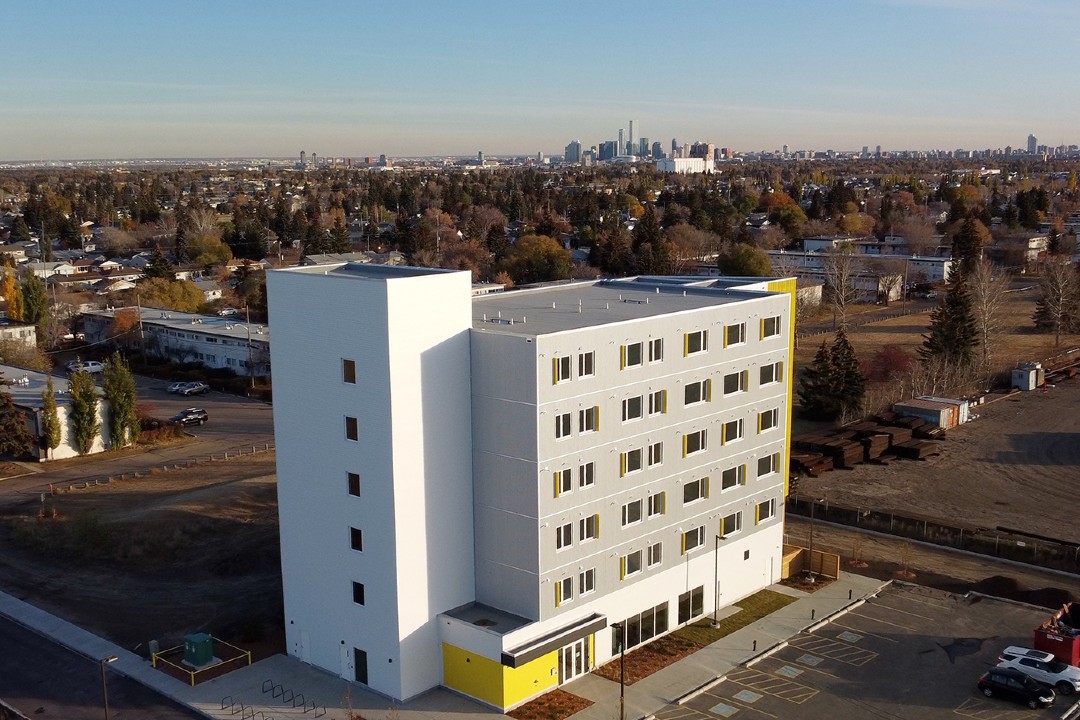
Edmonton's zoning reforms, partnerships draw praise at housing symposium
While Edmonton's zoning reforms, collaborative housing programs, and modern construction methods are earning national praise, the city still struggles to meet the growing demand for affordable housing.
Jeffrey Ku said he was heartened by the reaction from national colleagues at the Affordable Housing Symposium in Edmonton on Nov. 19. "I think one of the first things that just excited me was the fact that all these other folks from outside of Edmonton that had come to visit, had sat up front on the panels with us, and had mentioned what great work the Edmonton ecosystem is doing," Ku, supervisor of projects and delivery on the Housing Action Team at the City of Edmonton, said. "I think our partners needed to hear that too, and the city."
Edmonton has received national attention for certain pieces of housing policy in recent years, but the need for more affordable housing remains high. According to the city's housing needs assessment, one in eight households in Edmonton lives in core housing need, meaning it pays too much of its income for housing or lives in crowded or unsafe conditions and can't afford to move. City administration said that in the next five years, Edmonton needs nearly 40,000 more affordable rental housing units, up to 1,700 supportive housing units with wrap-around supports, and 189 transitional housing units.
City administration said the new zoning bylaw that went into effect in January 2024 makes it easier to build more housing, especially higher-density developments in mature neighbourhoods. A one-year report said the city approved 16,519 new dwelling units in 2024, a 30% increase compared to 2023. The volume of development permits the city received also increased by 41% in 2024. At the same time, housing prices have increased rapidly in Edmonton, at a rate higher than in most other Canadian cities. The average rent in Edmonton increased by nearly 15% in the past three years, the largest increase among Canada's big cities. The MLS composite benchmark price in the region was $415,500 in November 2025, an 11.3% increase from November 2022.
Ku said affordable housing innovation, which can happen through new partnerships and construction practices, is needed. Jasper Place Wellness Centre's bridge healing program has innovated in both ways, Ku said. The program is a collaboration between JPWC and the Royal Alexandra Hospital Foundation, meant to break the cycle of vulnerable people being discharged from the hospital with nowhere to go, and ending up in the hospital again soon after. "If we are able to help with the housing and ensure that folks coming out of the emergency rooms and getting their treatment have an opportunity to recover and then find more stable housing, they're not reentering homelessness and then reentering the emergency department and emergency wards at hospitals," Ku said.
The program is designed to be repeated in neighbourhoods across the city. JPWC started with three identical 12-unit healing houses in the Glenwood neighbourhood. Earlier this year, JPWC broke ground on two more healing houses in Parkdale, and this fall, the previous city council approved two more in Calder and one in Highlands.
Funding for affordable housing increasingly requires innovation as well. Ku said Build Canada Homes, the federal body that builds and finances affordable housing, looks for modern methods of construction when allocating grant funding. For example, the first five permanent supportive housing sites built using Rapid Housing Initiative funds from the Canada Mortgage and Housing Corporation employed modular development. "That was part of the requirements from CMHC at the time — they were more volumetric style, so they came in a box and you could lift (the module) up and slowly place it on like Lego blocks and then start connecting (the modules) and make sure that it works and then so on and so forth until it's completed."
The first project in Edmonton from BHC is Village at Griesbach, on the former CFB Edmonton site. BHC is engaging builders to develop 355 housing units on two parcels, some of which will be below-market. On another parcel, it is reviewing submissions from developers who applied to build about 45 units of housing, at least half of which will be affordable units.
Ku said work is ongoing to leverage additional opportunities for BCH funding. "What's the best way to frame our pipeline of available affordable housing to move forward ... and hopefully get some support from BCH to do so."
Jeffrey Ku was a guest on the Dec. 5 edition of Taproot Exchange, a members-only livestream that features different perspectives to support sense-making. Become a member for access to future livestreams.

A delicious partnership from Shumka & Zymo
Shumka and Zymo have partnered for a festive and delicious offer! Present your Shumka's Nutcracker ticket at Zymo and get 10% off your food order. Spectacular dance and delectable food make the perfect pairing! Until Dec. 21.
Headlines: Dec. 12, 2025
- University of Alberta student Carmela Spadafora conducted a survey that helped improve accessibility for DATS on campus, addressing challenges DATS drivers faced locating pick-up spots without exact street addresses. Spadafora's project gathered data from classmates and community members, highlighting issues like missed rides and "no-show" penalties." Instructor Jay Friesen and strategic infrastructure planner Kyle Witiw with the university used this information to audit campus stops and implement new numbered signs.
- The Alberta government concluded its turbulent fall 2025 sitting after passing 14 bills. The session was marked by repeated use of the notwithstanding clause, including a bill passed on Oct. 27 that invoked the clause to order striking teachers back to work and impose a four-year contract agreement. By the end of the sitting, 21 MLAs, including Premier Danielle Smith, were facing citizen-led recall petitions. Government House Leader Joseph Schow defended the government's agenda, saying it focus on healthcare, cost of living, and education. NDP Leader Naheed Nenshi stressed the Opposition's role in accountability.
- A ThinkHQ survey conducted from Oct. 31 to Nov. 5 shows nearly 60% of Albertans want to end public funding for private schools. This finding coincides with a citizen initiative by Alberta Funds Public Schools, which began gathering signatures to put the issue to a referendum. The group, which argues that public schools are inadequately funded, needs 177,732 signatures by Feb. 11.
- The Edmonton Arts Council has named 15 local artists as recipients of the 2025 Edmonton Artists' Trust Fund awards, each receiving $15,000. The $225,000 program, supported by the Edmonton Community Foundation and the City of Edmonton, aims to give artists financial stability to advance or experiment in their work. Established in 1997, the fund now holds $2.1 million and has awarded $1.3 million to Edmonton artists over its history. This year's honourees represent a wide range of disciplines, including theatre, music, comedy, poetry, dance, and design.
- Auditor General Doug Wylie released a report finding that Alberta Health Services (AHS) did not comply with reporting laws, failing to publish its 2023 business plan and releasing its 2024 plan 300 days late. The report also criticized AHS's "positive" and "selective" public reporting on the Healthcare Action Plan, announced by Premier Danielle Smith in November 2022, citing a lack of context and skewed metrics like EMS response times. Recommendations include a new provincial reporting framework for Acute Care Alberta and the Ministry of Primary and Preventive Health Services.
- The Edmonton Oilers placed defenceman Jake Walman on long-term injured reserve due to an undisclosed injury that head coach Kris Knoblauch confirmed is worse than expected. Walman, who last played Nov. 20, will be out indefinitely after signing a seven-year, $49 million extension in the off-season. The team also put forwards Jack Roslovic and Connor Clattenberg on injured reserve; Roslovic is expected to return around Christmas. Meanwhile, the Oilers recalled Max Jones from the AHL's Bakersfield Condors.

A moment in history: Dec. 12, 1979
On this day in 1979, the city's plan for naming the roads in Riverbend's new neighbourhoods came to light.
Edmonton was in a housing boom in the 1970s. Driven by high oil prices, cheap land, and a wave of Baby Boomers looking to buy their first homes, the city was expanding at a dizzying speed. Much of this growth was on the edges of the city, with Edmonton's first real municipal development plan favouring single-family homes.
Riverbend was a creation of that era. When city council approved the plan to develop the area in 1979, it was on the very southwest outskirts of the city. While there had been some residential construction in neighbourhoods such as Ramsey Heights and Brookside a decade before, most of the area was still farmland and rural properties.
The plan recommended continued development of the three existing neighbourhoods — Ramsey Heights, Brookside, and Brander Gardens — and six new ones: Ogilvie Ridge, Bulyea Heights, Falconer Heights, Henderson Estates, Carter Crest, and Rhatigan Ridge. The newer neighbourhoods would extend all the way to the city's southern border, near the modern-day 23rd Avenue.
Even then, there were plans to expand even further south. The 1979 plan mentions future connections to the Terwillegar area "should annexation occur." That would happen in 1982, when the largest annexation in Edmonton's history effectively doubled the city's footprint.
From the start, much of the development in the Riverbend neighbourhoods was focused on high-end homes, with easy access to the river valley and views of downtown heavily promoted as selling features. In fact, the neighbourhood of Ogilvie Ridge was apparently planned and marketed as a gated community early on, although that changed.
The Riverbend neighbourhoods continued to grow over the 1980s and '90s, and the city's borders continued to expand outwards. The original Riverbend Community League, which was founded in the early '70s, used to cover the entire area. But as the population grew, community leagues emerged for areas such as Brookview and The Ridge.
Today, Riverbend is nowhere close to Edmonton's edge. Terwillegar Drive, once a rural two-lane road winding through the new suburbs, is under construction to be expanded into a four-lane freeway to accommodate increasing traffic. And that southward expansion continues. In 2019, Edmonton annexed a large amount of land from Leduc County in anticipation of further growth. A service study of the area is due at the end of 2026.
This clipping was found on Vintage Edmonton, a daily look at Edmonton's history from armchair archivist Rev Recluse of Vintage Edmonton.

Happenings: Dec. 12, 2025
Here are some events happening this weekend in the Edmonton area.
- Dec. 12: Celebrate the Season starting at 6:30pm at Alberta Legislature
- Dec. 12: Friends & Neighbours Soirée starting at 8pm at Riverview Crossing Mall
- Dec. 12-13: Handel's Messiah at Winspear Centre
- Dec. 12-13: Star Wars VI: Return of the Jedi In Concert at Northern Alberta Jubilee Auditorium
- Dec. 12-14: Chase Padgett: A 6 String Christmas at Westbury Theatre
- Dec. 12-Jan. 2: Candy Cane Lane
- Dec. 13: The Waste-Less Holiday Market starting at 10am at City of Edmonton Reuse Centre
- Dec. 14: How The Grinch Stole Breakfast starting at 11am at Dolly's Cocktail Bar
- Dec. 14: A Christmas Past starting at 12pm at Rutherford House
- Dec. 14: Winter in Little Italy starting at 12pm at The Piazza
- Dec. 14: Christmas Bird Count Walk starting at 1pm at Whitemud Park and Ravine
- Dec. 14: Cake Decorating Workshop starting at 2pm at Islamic Family & Social Services Association
And here are some upcoming events to keep in mind:
- Dec. 22: Holiday Apple Pie Baking Workshop at Ritchie Community Hall
- Until Dec.28: Die Harsh: A Christmas Musical at The Orange Hub
- Until Dec.21: Girl Brain, Actually at Roxy Theatre
Visit the Taproot Edmonton Calendar for many more events in the Edmonton region.

The Taproot Mini - No. 113
Test your crossword prowess and deploy a little of your Edmonton knowledge. Complete the puzzle.
Did you know that Taproot sells memberships? Might be a great way to show how much you love the Mini!
The Taproot Mini is brought to you by ATB, your homegrown source of good advice to help conquer life's tougher puzzles. Learn how.
