
The Pulse
Nov. 13, 2024
Here's what you need to know about Edmonton today.
Essentials
- 7°C: A mix of sun and cloud. Wind up to 15 km/h. High 7. Wind chill minus 11 in the morning. UV index 1 or low. (forecast)
- Red/Yellow/Orange/Green/Blue/Purple: The High Level Bridge will be lit red, yellow, orange, green, blue, and purple for Speak OUT 2024. (details)
- 4-3: The Edmonton Oilers (8-7-1) defeated the New York Islanders (6-6-4) in overtime on Nov. 12. (details)

Why the decline in public housing is 'the origins of Canada's housing crisis'
As Edmonton enters an election period while nearly 4,700 residents are homeless, Taproot spoke to experts with Community Housing Canada and the Collins Lab for Urban Excellence at the University of Alberta to learn more about Edmonton's supply of non-market housing.
Damian Collins, professor of human geography at the university, told Taproot the federal government started to withdraw financial support for the construction of public housing at the end of the Brian Mulroney government in the early 1990s and the beginning of the Jean Chrétien government that followed — and subsequent governments followed suit.
"It's the origins of Canada's housing crisis," Collins said.
The City of Edmonton recently said there are fewer than 17,000 units of housing across Edmonton that the poorest residents can afford, and that 46,000 households are living somewhere they can't afford, is crowded, or is unsafe.
Experts suggested the overall supply of housing built with either partial or full subsidies from public governments has played a role in the housing pressures many people in cities, including Edmonton, are now experiencing.
That supply of public housing traces its roots back to 1946, when the federal government created the Central (now Canadian) Mortgage and Housing Corporation to offer a new 25-year, low-interest mortgage to veterans returning to Canada after the Second World War. At the same time, the CMHC administered the National Housing Act, which provided subsidized housing to households that could not afford to pay market prices. Some reports estimate Ottawa helped fund 5,356 units of social housing each year between 1985 and 1989. If the federal government had continued funding housing at this rate between 1994 and 2013, more than 107,000 subsidized housing units could have been built. In January 1994, however, the government froze the CMHC budget at $2 billion, and it stopped funding new social housing. The current federal Liberal government announced Canada's Housing Plan in April, which calls for non-market housing to be built on every possible piece of public land. The plan includes $1 billion to build non-market housing and $1.5 billion to protect and expand non-market housing.
Katie MacDonald, a co-investigator on the Community Housing Canada project and an assistant professor at Athabasca University, said the historic cuts meant not only that no new social housing was being built, but that existing housing fell into disrepair.
"It's not like the non-investment was a hold," she said. "It's not like, 'Okay, we're in the same situation we were decades ago, you can step right in.' No — buildings have deteriorated."
At the same time that the federal government stopped subsidizing housing, purpose-built rental construction declined in Edmonton, further constricting the housing supply for all income levels.
Public housing is still being built in Edmonton, but it's going up in different ways across the city.
Headlines: Nov. 13, 2024
- Edmonton retailers are concerned about disruptions to their busy holiday season because of a potential Canada Post strike, as the Canadian Union of Postal Workers issued a 72-hour strike notice on Nov. 12. Many small businesses that rely heavily on Canada Post for shipping and invoicing are preparing for possible impacts and increased strain on the shipping system. Some retailers, such as Audrey's Books, are finding alternative solutions, but the situation remains uncertain as negotiations continue.
- Edmonton's bylaw banning plastic shopping bags and Styrofoam containers has been in effect for 500 days without any tickets issued. The City of Edmonton has instead sent 55 "education letters" to non-compliant businesses. While some residents and officials believe the single-use item reduction bylaw is encouraging more people to use reusable bags, others have concerns about its effectiveness as some businesses repeatedly violate the ban. The City is seeking feedback on the bylaw through an online survey open until Nov. 19.
- The owners of the historic Princess Theatre on Whyte Avenue in Edmonton are seeking buyers who will preserve its cultural significance, rejecting offers to convert it into retail or dining spaces. Despite the building's need for repairs and challenges like vandalism, the owners remain committed to finding a buyer to maintain its legacy in the arts community. The theatre closed in 2021 and was listed for sale the following year.
- The Canadian Condominium Institute North Alberta Chapter is criticizing the rollout of Edmonton's waste collection program for apartments and condos, citing issues like overflowing bins and higher private waste removal costs. The City of Edmonton has made efforts to educate residents about the program, which collects garbage, food scraps, and recycling separately, but the organization says the program should be slowed down. Currently, 28% of Edmonton's condos and apartments have adopted the program, with plans to expand further across the city.
- The University of Alberta announced it will cut its Golden Bears and Pandas swim programs at the end of the 2024-25 season because of financial constraints and the lack of a competitive swimming facility. The decision shocked and saddened many involved with the programs, which have been part of the university since 1948.
- Carol Powder, an Indigenous woman in Edmonton, is struggling to find housing for herself, her husband, and her 10 grandchildren after being forced out of their previous home due to the landlord selling the property. Despite her efforts to secure a new rental, Powder said she faces discrimination from landlords who refuse to rent to Indigenous people. The situation, compounded by the city's low rental vacancy rate of 2.3%, highlights broader issues of housing discrimination and affordability challenges faced by Indigenous families in Edmonton, said Blake Jackman, housing director for Native Counselling Services of Alberta.
- Mary McEachern, a 101-year-old widow from Edmonton, is in a legal dispute with the Rotary Foundation of Canada over her late husband Steve McEachern's $40-million estate, which he initially designated to Rotary in his will. Mary said her husband intended to amend his will to distribute the funds among various Canadian charities, including several in Edmonton and Alberta, before he died in 2020. She has offered the Rotary $13 million, but the organization continues to pursue legal action.
- With Edmonton's unofficial Christmas shopping season underway, local businesses like the Makers Keep are seeing increased foot traffic but smaller average transaction amounts. Data from Moneris shows that while the number of transactions in Alberta is rising, average spending per transaction is decreasing, reflecting a trend of cautious consumer spending amid inflation.
- Joan Hertz of ATB Financial and Malcolm Bruce of Edmonton Global published an op-ed in Postmedia highlighting how the Edmonton region is positioning itself as a leader in AI innovation within construction and engineering. The AI x CE Strategy, backed by the Edmonton Chamber of Commerce, aims to integrate AI into construction and engineering, enhancing productivity, safety, and efficiency across upcoming large-scale projects. The effort showcases the region's commitment to becoming a competitive, forward-thinking hub for AI-driven industrial advancements, they wrote.
- The Alberta government is considering former Prime Minister Stephen Harper as the new chair for the Alberta Investment Management Corporation (AIMCo) after dismissing the CEO and entire board. Premier Danielle Smith reportedly has long favoured Harper for the role, Postmedia reported, but prior business interests needed to be addressed to prevent potential conflicts of interest. The province has appointed Ray Gilmour as interim CEO, with Finance Minister Nate Horner temporarily serving as board chair until a permanent leadership team is established.
- The federal government has launched the Canadian Artificial Intelligence Safety Institute (CAISI) to address AI safety risks and promote responsible AI development, as part of a $2.4-billion investment announced in Budget 2024. CAISI will leverage Canada's AI research ecosystem, including the Edmonton-based Alberta Machine Intelligence Institute (Amii), to advance AI safety measures and international collaboration. The Canadian Institute for Advanced Research (CIFAR), leveraging a $27 million government grant, will support CAISI's work by leading the applied and investigator-led research stream.

Cecilia Romero: 'What if I had given up on them?'
This is one of 12 interviews conducted with various Edmontonians about their experience with the housing system. It has been edited for clarity and length. Read more about why and how Taproot embarked on this series.
Cecilia Romero is the client services program manager for Operation Friendship Seniors Society, a non-profit society that provides community-based preventative social services to the seniors of Edmonton's inner city, operating more than 310 affordable housing units for Edmontonians over the age of 55. Romero is a registered social worker who has worked as a volunteer, a job centre worker, an outreach worker, and a manager since immigrating to Edmonton in 2010.
Can you tell us what role you play in the housing ecosystem now?
As a manager at a non-profit organization, I coordinate the direct services department, hiring, posting positions, reporting, and anything that is needed, but I'm still in touch with the seniors. It's sad because the people that I worked with when I was in outreach, many of them are already passing. It's hard because for a big number of our seniors, we are the only constant personal people in their lives.
You came to Edmonton from El Salvador. What was that like?
When you hear about First World countries, you do not imagine that there is poverty and homelessness and a bunch of other mental health issues, and so I wasn't able to process what I was seeing. I think you always know there is going to be poor people everywhere, but not this level. All First World countries project being the best of the best, so I couldn't understand how people here didn't see the poverty, or could see it, but that it didn't bother them.
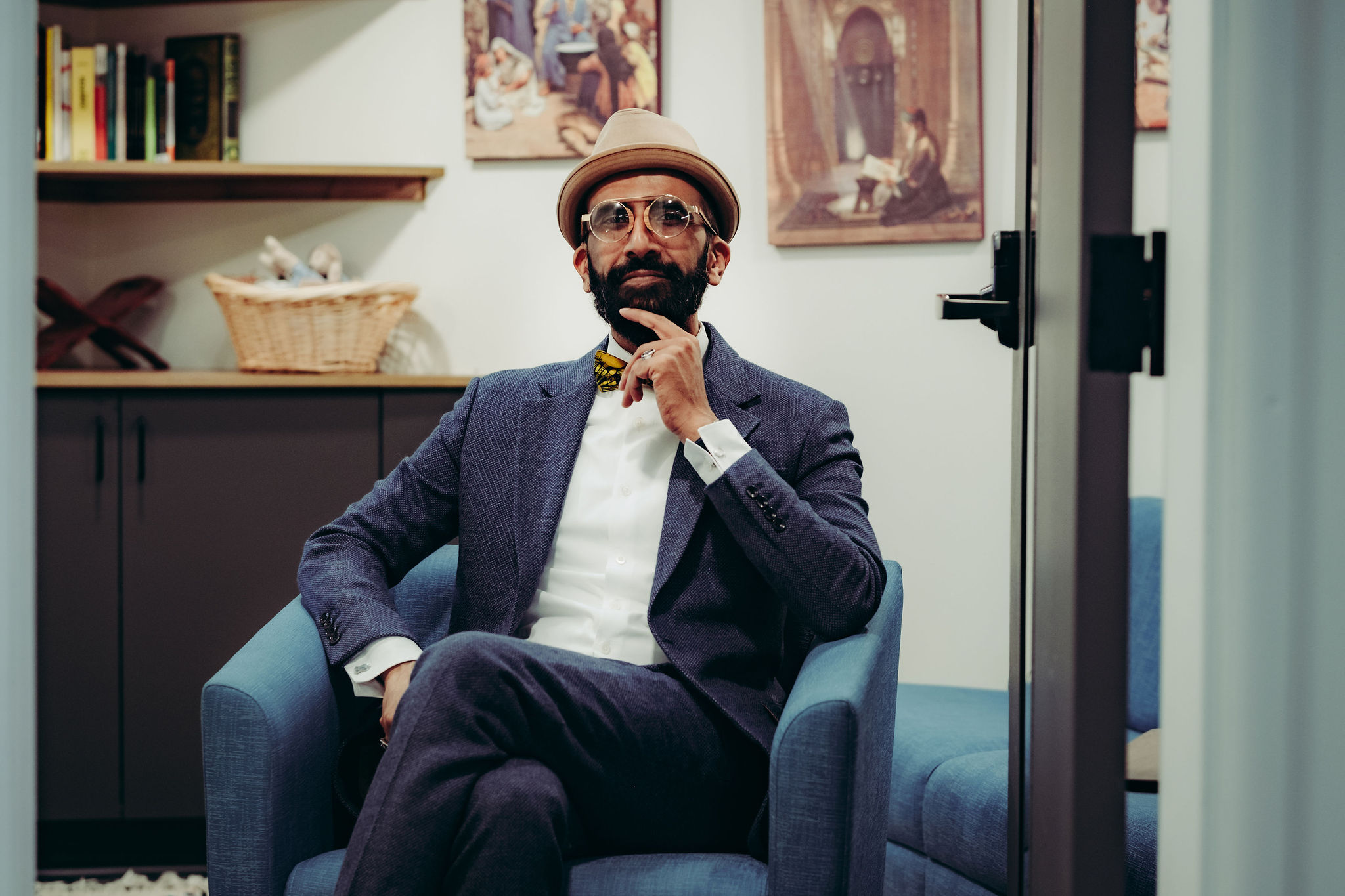
Omar Yaqub: 'Why is the policy this way?'
This is one of 12 interviews conducted with various Edmontonians about their experience with the housing system. It has been edited for clarity and length. Read more about why and how Taproot embarked on this series.
Omar Yaqub serves the team at IslamicFamily.ca, a holistic social change organization based in Edmonton. IslamicFamily (also known as IFSSA) serves thousands of Albertans every month, providing care and community connection, as well as capacity-building research and supports for the social sector. Yaqub was born in Edmonton, lived in Mundare for the first six years of his life, studied at the University of Alberta, and worked globally before returning to make Edmonton home. At IslamicFamily, he was instrumental in forming the Halal Housing Lab, a collaborative research project on the complexities of housing for extended families, values-aligned financing, and community-based rent supplements.
Can you tell us how you got into the housing ecosystem?
(While a university student) I started volunteering with a small community organization (IslamicFamily), which at the time had barely two staff and was operating out of an industrial warehouse in the south side. Through more than 10 years on the board, I got to see the organization grow dramatically. In 2018, I took this thing that I'm really passionate about from the side of my desk to the front of my desk and haven't looked back since.
Housing underpins every single thing we do. If we're talking about someone who's trying to flee domestic violence, housing is integral. Oftentimes people stay in an abusive situation because of housing. Housing is a crucial part of addressing mental health, and it's a crucial part of supporting newcomers.
Two (of many) stories motivate me around housing: One of a mom who was taking care of her parents and her kids and living in an abusive relationship. The choice she was given by our system was "Leave your parents, leave your kids, or stay in abuse." The reason that person had to stay in that situation is because the systems we have aren't designed for that (a multigenerational family).
The other story I think about is of a father who came here from Iraq. He was taking care of his siblings' children, because of war, his siblings had died, and so he had this very large family, of 12 or 15 kids, and there's nowhere to put this family. Some kids are in one unit and other kids are in another unit. After all these years, after all this dislocation and displacement, we can't even let them share a roof and have a place that is made for them to share a meal together.
I think these stories are important. They're not stories unique to our community, they're stories shared with Indigenous people and with many others. These are the stories that compel me to do the work I do, to see how we can work on building solutions.

Happenings: Nov. 13, 2024
Here are some events happening today in the Edmonton area.
- State of the County with Sturgeon County Mayor Alanna Hnatiw starting at 11:30am at Cattail Crossing Golf & Winter Club
- Housing Month Webinar - From Treatment to Housing starting at 12pm online
- Poetry Night starting at 7pm at The Carrot Community Arts Coffeehouse
- Women In Leadership Networking Dinner starting at 6pm at Brew + Bloom (Downtown)
- Medicine Hat Tigers vs. Edmonton Oil Kings starting at 7pm at Rogers Place
- The Olive Reading Series starting at 7pm at Rooster Cafe and Kitchen
- Dev Edmonton Society Monthly Meeting starting at 8pm online
And here are some upcoming events to keep in mind:
- Nov. 21: An Evening of Presentations | YEG Reconnect at Road 55 Studio
- Nov. 23: Downtown Winterval at 104 Street downtown
- Nov. 28: Economic Reconciliaction: A Symposium for Changemakers at Edmonton EXPO Centre
Visit the beta version of the Taproot Edmonton Calendar for many more events in the Edmonton region.