
Poignant Remembrance Day for advocates of war memorial organ
After months of advocating against a decision to move a war memorial instrument from the University of Alberta to a town north of Lethbridge, this Nov. 11 has a deeper meaning for Haley Simons.
"I feel much more strongly about Remembrance Day now," said Simons, who is part of the Unite for the Pipes group. "The tie for me is stronger and a lot more tragic."
The university announced in April that it would remove the Casavant Opus 3358 organ from Convocation Hall to facilitate renovations to enhance accessibility. In August, the university said it had found a permanent home for the instrument with the Netherlands Reformed Congregation in Picture Butte. The university told Taproot the organ has now been fully dismantled and is in storage while the congregation builds a new facility to house it.
The memorial organ traces its origins to the aftermath of the First World War, when the university sought a way to honour 82 students, staff, and alumni who had died in service. A War Memorial Committee considered several possible tributes before deciding that an organ would be the most fitting. The university's alumni history records that graduates, professors, students, and campus workers contributed to a $12,000 fundraising campaign led by the Alumni Association. Casavant Frères installed the instrument in Convocation Hall in 1925.
Back then, about a decade after the university opened, it was still a small, tight-knit community of a couple hundred people, said Andy Grabia, an organizer of the Unite for the Pipes campaign. "It's not like now with the school of 50,000 people — they knew each other very well, and they lived with each other, and were possibly related to each other," he explained on Episode 372 of Speaking Municipally, Taproot's civic affairs podcast.
Simons said it's important to also consider the percentage of U of A members who were sent away, and how many didn't come back, to put the impact into perspective. "We talk about these 'soldiers' who went to war — they weren't. They were students, they were your colleagues, they were professors, they were the kids," Simons said. "Sure, everybody knew the kids, there was a community component, but imagine what you would feel like if you had 40% of your entire institution being called away, and 20% of those not coming back."
The organizers chose the organ out of the many options because they wanted to remember their colleagues through music, Grabia said. "They felt that was a very appropriate way to be able to mourn — to experience joy and sadness and all the things that music provides us."
The organ was cleaned, expanded, and reconditioned in 1947, when the memorial was broadened to recognize university community members killed in the Second World War. The original instrument was replaced by another Casavant organ in 1978.
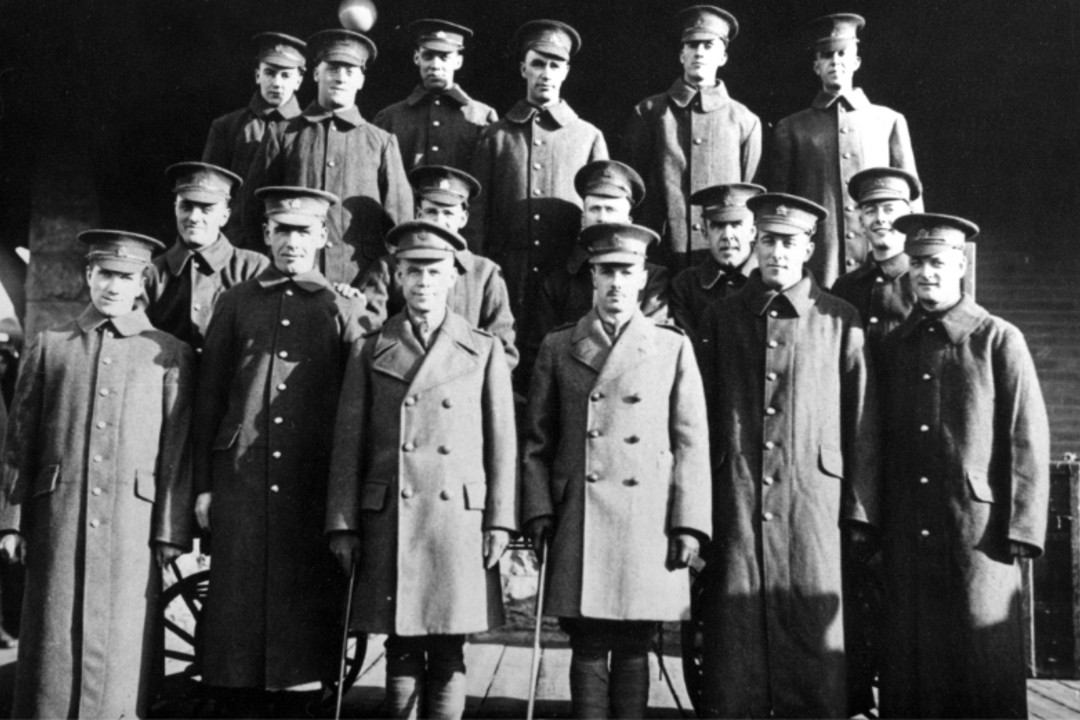
The University of Alberta Tank Contingent, photographed in April 1918. The university recruited a company for the 1st Canadian Tank Battalion, an initiative intended to bring university men together to serve under their own officers. (University of Alberta Archives, McDermid Studios Fonds (UAA-1917-198))
Simons now works in the legal industry in British Columbia, but she is an alumna of the university's music department. Despite that, she said she actually didn't get involved for musical reasons. "(The organ) so far surpasses the normal capacity of simply a musical instrument," she said. "An organ isn't something that you can move around — it's beyond a physical instrument because it encompasses a hall, so it is a place."
The university said it will enhance the honour roll bearing the names of members who served in the First and Second World Wars, and potentially expand it to recognize members who served in subsequent conflicts and peacekeeping missions. But Grabia said the instrument and honour roll should be kept together at the university.
"For those of us who are graduates of that university, it's for us to remember that there were people before us who fought for our school, who fought for our province, and fought for our country," Grabia said. "You cannot separate the location from those soldiers, especially because many of them don't even have tombstones … This is this place where you can come in and look at their names and still honour and remember them."
Convocation Hall was damaged in a flood in late August, and the Unite for the Pipes group had been concerned the organ was damaged. The university told Taproot the organ was not adversely impacted in any way.
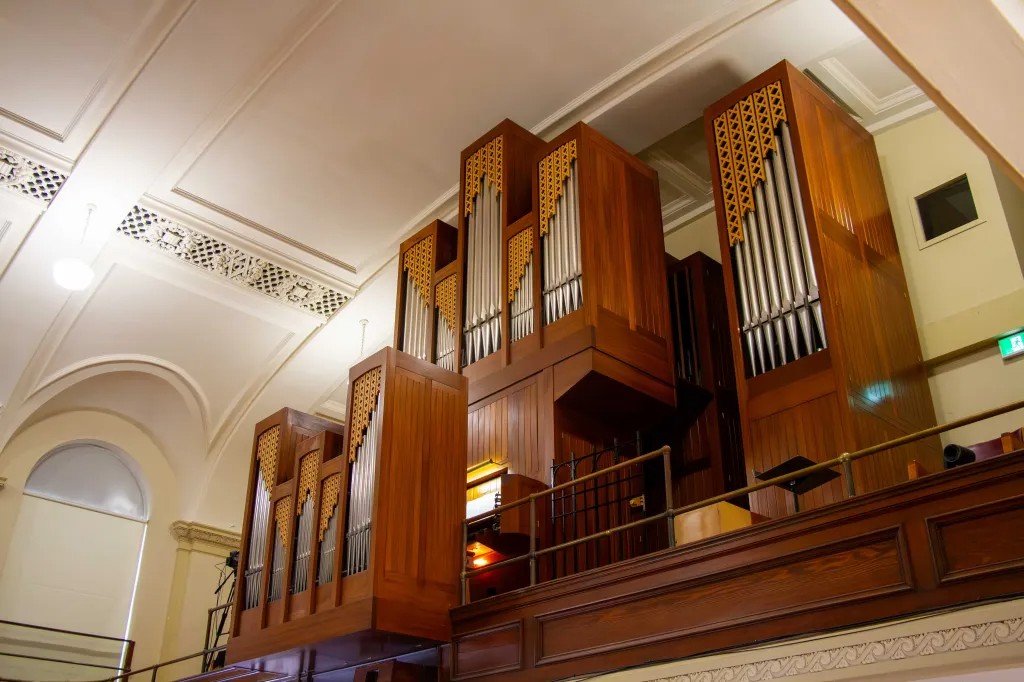
The memorial organ in Convocation Hall, before it was dismantled. (Unite for the Pipes)
The university said it recognizes the strong feelings around the organ, including a petition with nearly 48,000 signatures calling for its removal to be paused. It cited an independent report that recommended that the organ be sent to a suitable home with a formal rededication after being professionally disassembled and preserved, and that the university should communicate clearly throughout the process.
Even though the organ has been removed from Convocation Hall, Simons said she has not lost hope.
"I don't think this matter is dead in the water. I think that wherever the organ is or is not can always be changed at this point, and that there could very easily be a push to return it to its home," Simons said. "I hope that happens."
For more on the historic importance of the memorial organ and the state of heritage preservation in Edmonton, listen to Grabia's interview with Mack Male.
Share