
New book makes case for arthropods' beauty and importance
An Edmonton photographer wants to give insects and arachnids a better reputation through his new photography book, Tiny Titans: The Silent Keepers of Our Ecosystem.
"I feel a lot of people overlook insects because they're tiny and you could just squash them or sweep them away, but they are actually really fundamental to our survival," Dara Ojo told Taproot. "They are declining at a very high rate, which is detrimental to our existence as humans."
Ojo, who grew up in Nigeria, ended up working in China, where he found himself stuck at home during the pandemic. He picked up a photography hobby, starting with birds. But because COVID-19 travel restrictions made it hard for him to migrate along with his subjects, he decided to try out macro photography with much tinier — and local — creatures. His interest grew and continued when he made his way to Canada.
Ojo's process involves a special lens and a technique called "focus stacking," where multiple shots taken at different focus distances are combined for the final image. It also usually involves standing very still in a park in the middle of the night, Ojo said.
"You tend to see me at the park at 3am or late at night because that's when insects are docile, and that's the biological part — they also go to sleep like we do, and that's when you can get close without killing them," he said. "Most people kill insects to take photos of them, but if you do go there at night, they're pretty much still."
The book, which can be ordered now and will be launched at the Edmonton Public Library's Stanley A. Milner branch on Nov. 25, has a chapter dedicated to Canada, with about 80% of those creatures photographed in the Edmonton region.
He said many of the local pictures were taken in Hermitage Park and the University of Alberta Botanic Garden. Ojo works as a data analyst for the university, so he's able to stay in the garden overnight. "I just sleep there, so it's easy for me to just come out at midnight and take my photos and go back to sleep in the morning," he said.
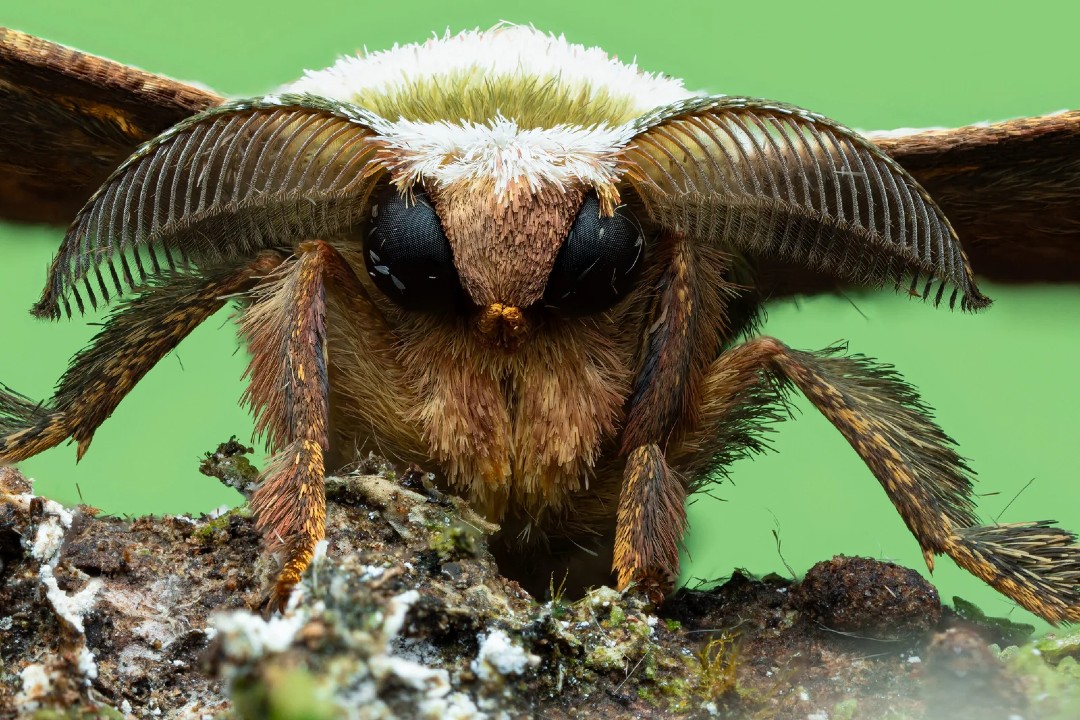
Dara Ojo has photographed insects like this moth in countries all over the world. (Dara Ojo)
Ojo has "zero background in sciences," he said, just a personal passion for six- and eight-legged animals. "With my experience in the field and people that I've chatted with and things that I've read, maybe I'm pretty much done with my BSc in entomology," he joked.
While readers will likely be drawn to the gorgeous colourful creatures photographed in Costa Rica or Ecuador, our humble brown moths and mosquitoes also deserve recognition, in Ojo's estimation.
"You also can find a lot of things in your community, and whatever conservation we're doing starts from where we are," Ojo said. "It's not just when you travel abroad that you're trying to protect the environment. It has to be your garden, your backyard, your local park, your local garden."
This summer showed Edmontonians the cascading impacts of extreme weather on insects and thus humans. The city's record rain led to a reduced dragonfly population because the water swept away their nymphs, he said. And what's a dragonfly's favourite snack? Mosquitoes, which were about 15 times more plentiful compared to last summer.
Insects are "indicators of healthy water bodies, they are decomposers, they help us in cleaning up our ecosystem," Ojo said. "If they're not there anymore, the ecosystem becomes toxic."
Ojo's book launch at the library on Nov. 25 is part of the Capital City in Conversation series. The evening will also feature a conversation with naturalist John Acorn, who wrote the foreword, as well as three University of Alberta scientists: Felix Sperling, Maya Evenden, and Carol Frost.
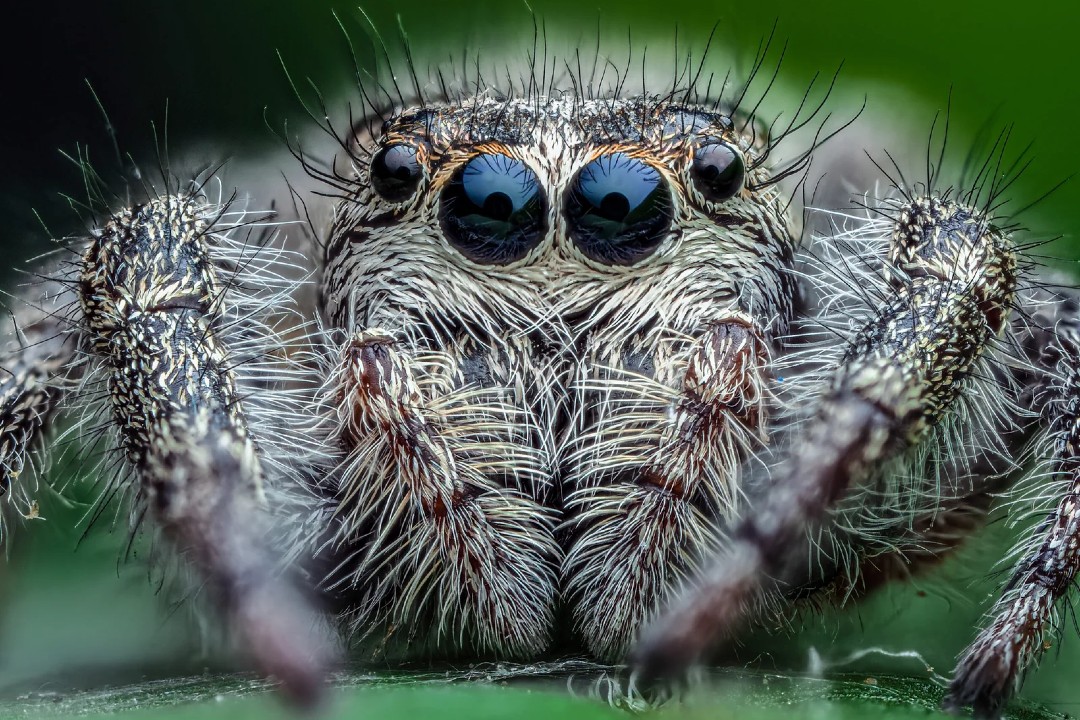
Dara Ojo's book aims to highlight what we overlook about creatures like this spider. (Dara Ojo)
Share