
Resistance to book restrictions is built on community
The curator of a new banned-book subscription service says it's important to not only read books that are commonly banned, but also get together and talk about them.
"I'm really hoping to build community around this, because I think that stories, especially stories that challenge us and make us maybe a little uncomfortable, they have the power to build empathy and open minds, and the best way to do that is to put it into practice in community," said Robyn Wilson of Lit Resistance.
The service sends out a book each month that has been pulled from classrooms or challenged in libraries. The website will also include a book club board to connect readers with local and online discussion circles.
Wilson started the service partially in response to the growing prevalence of book bans and restrictions in Alberta and elsewhere. In 2025, the provincial government directed school boards to remove material that visually depicts a sexual act. "These new standards are to ensure that school boards have clear guidance to ensure age-appropriate access to school library materials, while reflecting the values and priorities of Albertans," Education Minister Demetrios Nicolaides said in a release at the time. Alberta school boards responded by pulling more than 170 titles, including graphic novel depictions of Margaret Atwood's A Handmaid's Tale and George Orwell's 1984.
In May of this year, the Alberta government went further, passing Bill 28, which lets the Municipal Affairs minister make regulations restricting who can access material at public libraries based on age. The move disappointed the Coalition of Alberta Public Libraries, which has asked for consultation before the regulations are set.
"It's happening all across North America, but when it's happening right in our own backyard, I couldn't look away from it," Wilson said. "I have nieces that are in schools, and I want them to be able to read books that they want to read, and not have their shelves empty of books, because the government has decided that they shouldn't be able to read them."
Wilson acknowledged that some of the books that have fallen under scrutiny feature drawings or descriptions of sexual acts, but she feels that reducing a book to such content is unfair. "It takes away all of that story and all of that learning and all of that real humanness that I think is really important for people to read, and so that's why it's really important to read these books, even if there is something in there that might make you uncomfortable, like an explicit sex scene," she said.
The first book in the Lit Resistance service — Last Night at the Telegraph Club by Malinda Lo — went to subscribers earlier this month. It tells the story of two young girls who fall in love in San Francisco's Chinatown in the 1950s. Wilson said she wanted to make sure she launched the service in time for Pride month, because a large portion of books that are commonly banned have a 2SLGBTQ+ perspective. Indeed, of the four graphic novels the provincial government first mentioned when introducing new rules around what can be accessed in school libraries, three were queer coming-of-age stories.
One of those books was Gender Queer by Maia Kobabe, which was the first book chosen for the Objectionable Publications Book Club started by Variant Edition, a shop that sells graphic novels and comics in west Edmonton.
"It felt like the honest first choice to really focus in on something that's not being attacked just here locally, but in quite a broad sense, and to have more people experience the book, which … is extremely humanizing," owner Brandon Schatz told Taproot.
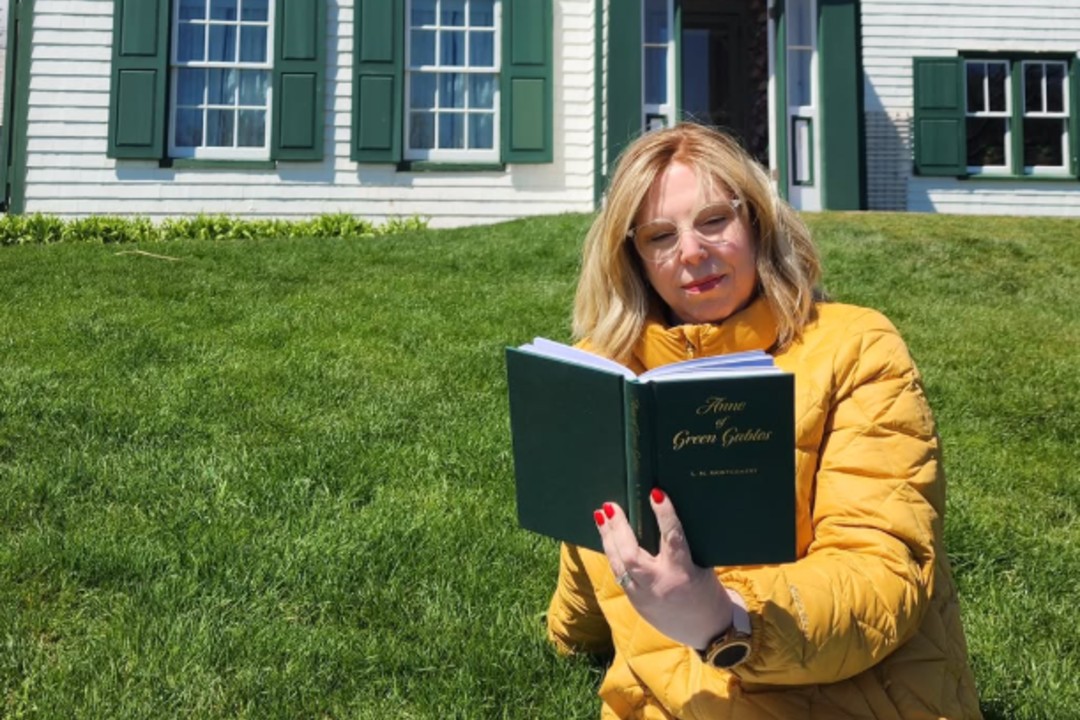
Robyn Wilson of Lit Resistance reads Anne of Green Gables. It's said that the Soviet Union banned the book during the Second World War because Anne embodied individuality. (Lit Resistance/Instagram)
The name of the book club comes from a committee called the Advisory Board on Objectionable Publications, which existed in Alberta from 1954 to 1976 to control the sale of "objectionable" comics, tabloids, and magazines.
The book club's next read is Persepolis by Marjane Satrapi. It's an autobiographical graphic novel about growing up in Iran that has been banned in some North American schools due to its depiction of violence.
"We figured it would be a good thing to talk about, especially now that turmoil continues to happen over there," Schatz said. The club will discuss the book on June 30 at Waffle Bird.
Like Wilson, Schatz believes it's important not only to read banned books but to discuss them. "I think that over the years, we've lost a lot of connection with each other and the ability to express different ideas in an effective manner," he said. "There's nothing quite as humanizing as sitting down and talking with somebody who's there with you."
Schatz said he's seen a lot of interest in his book club as the provincial government has introduced more restrictions. "I can't tell you how ineffective book bans are, because the minute that someone produces a list of things you should not read or should not be spread around, it'll spread like wildfire," Schatz said.
Pilar Martinez, the outgoing CEO of the Edmonton Public Library and a member of the steering committee for the Coalition of Alberta Public Libraries, called Bill 28 censorship when it was in the works.
"Public libraries have always said that we believe that parents are in the best position to decide what's best for their children to read," she told Taproot in April. "When a parent gets a (library) card for their child, they have to agree to take responsibility for what their children borrow (and) how they use the materials."
While public libraries wait to see how Bill 28 will be implemented, the Edmonton Public Library continues to sell T-shirts that say "Read Freely", and it encourages people to sign up for its newsletter on intellectual freedom. The coalition's website says it "remains eager to collaborate with the province on practical, operational steps that address the government's concerns, while respecting parental responsibility and the rights of individuals to choose what is best for themselves and their families."
James L. Turk, director of the Centre for Free Expression at Toronto Metropolitan University, urged Alberta libraries to delay taking action on the new legislation.
"Doing nothing, or rather continuing your current practices consistent with your library board's approved policies and with your own staff's best professional judgment, is the best way to protect intellectual freedom and to serve your community," Turk wrote.
Share