Edmonton Arts Council makes case for budget increase
The head of the body that distributes grants to Edmonton artists will be asking for a funding increase this fall when city council deliberates on the next four-year budget.
"We've seen so much growth in the sector with a lot of new people moving into Edmonton, many new artists finding their way into Edmonton ... but our ability to fund and our (application) success rates are steadily declining," said Renée Williams, CEO of the Edmonton Arts Council.
The organization receives funding from the City of Edmonton and distributes it to artists, collectives, and arts organizations. In the 2023-2026 budget cycle, city council allocated just under $18 million annually to the EAC, the same level that was allocated in the previous four-year budget. Williams told Taproot that the organization received just under 1,200 applications in its individuals and collectives stream in 2025. Out of those, it was only able to fund 234, indicates the annual report. In previous years, there has been a success rate of around 30% of applicants, but that number has now declined to about 19%, she added.
Williams said she will be making her case for a budget increase, as will many other city-funded organizations, when council starts deliberating the 2027-2030 capital and operating budgets in the fall. She said the EAC will try to focus its budget ask on the strategic priorities that Edmonton city council approved near the start of its term — economic development, growth management, quality services, and safety.
"We know as the Edmonton Arts Council that the work that we fund and invest in touches a number of those key priorities," Williams said. "It's about making that case, socializing that with council early in the hopes that enough of that socialization gets them thinking."
But numbers and metrics don't tell the whole story, said Jake Tkaczyk, an arts administrator and independent artist-producer. He is the managing director of Shumka, artistic director of Munt Performance, and director of the weekly live improvised soap opera Die-Nasty. While metrics such as attendance figures, economic activity, tourism benefit, and return on investment can be valuable, art does not exist primarily to generate economic outcomes, Tkaczyk said.
"The longer that I work in the arts, the more that I find myself wondering whether our reporting systems are measuring things that matter the most as artists," he said. "Public funding requires accountability, and funders like the EAC have every right to understand how resources are being used — yet somewhere along the way, many of our reporting frameworks have begun to resemble business plans."
Williams said she's had meetings with most of the members of Edmonton city council, and they all see the value that art, culture, and heritage bring to civic life in Edmonton. But though numbers don't tell the whole story, they are still part of the story.
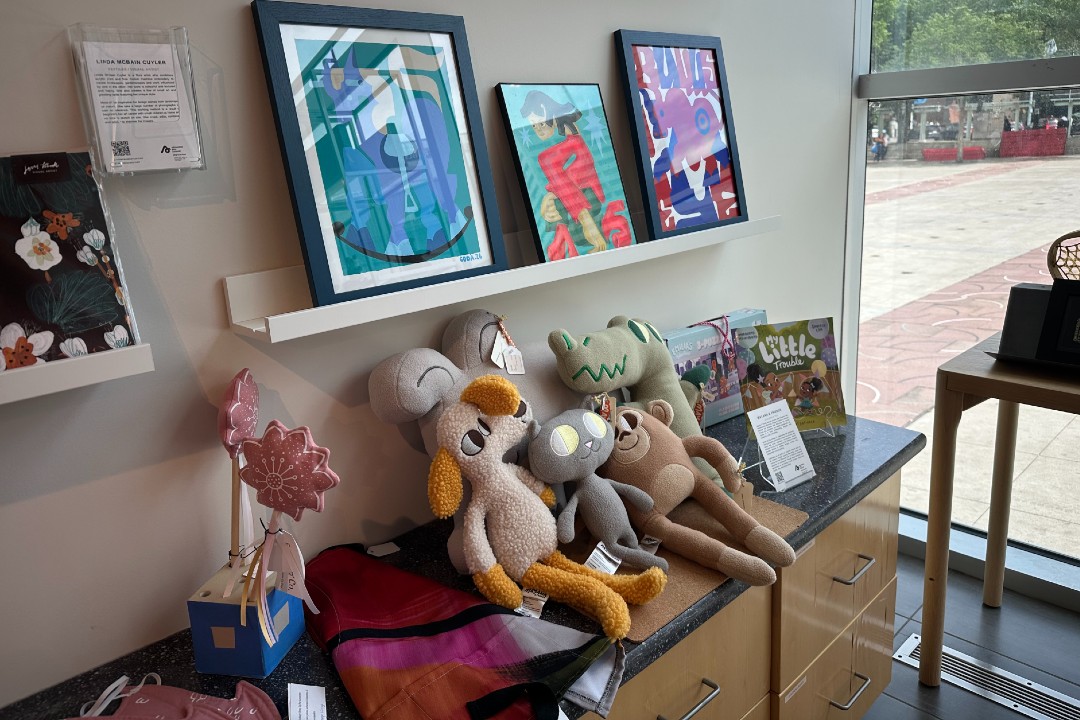
The Edmonton Arts Council shop in Churchill Square sells local creations as well as tickets to events. It brings in some revenue, but city funding makes up the vast majority of the EAC's budget. (Stephanie Swensrude)
"It's a marriage of the qualitative and the quantitative," Williams said. "It's the things that we feel, it's the experiences that we have, it's bringing connections and community together, but there is this underlying need, desire, and expectation that the quantitative pieces are also being considered, and we … as a sector cannot ignore that side."
The EAC has launched Why The Arts Matter, a campaign encouraging Edmontonians to share why the arts are important to them. The organization is calling for people to email the mayor and councillors about how the arts have made a difference in their lives, to fill out an online form about art's impact, and to engage in the arts by attending a local event.
During the 2025 municipal election campaign, Taproot asked candidates which of the following came closest to their position on public funding for the arts:
- Essential to quality of life and in need of stable funding;
- An economic driver, so prioritize projects with measurable economic impact;
- Not a core responsibility, so prioritize funding essential services instead.
Of the winning candidates, most said the arts are essential and need stable funding. Ward Anirniq's Erin Rutherford and Ward sipiwiyiniwak's Thu Parmar said the arts are an economic driver and supported prioritizing for economic impact; Ward tastawiyiniwak's Karen Principe did not answer the Taproot Survey.
Among the 27,000 voters who took the survey, 42% said the arts were essential and needed stable funding; 30% considered them an economic driver; and 28% said they're not a core responsibility.
The EAC's annual report said it distributed more than $14 million to 204 arts and festival organizations as well as 234 artists and collectives in 2025. It spent just under $2 million on public art projects, which are funded as part of capital projects.
The Edmonton Arts Council Shop & Services, located in Churchill Square, sold more than $165,000 in local art in 2025, as well as more than 13,000 tickets to events. The EAC has a few other smaller sources of revenue, but the vast majority of its budget comes from the city.
Meanwhile, the Canada Council for the Arts recently committed $25 million to the province's artists through the Alberta Focus Fund. Tkaczyk said he would like to see the Canada Council continue to invest in Prairie artists.
"It's not just Edmonton's responsibility — it goes beyond that," he said.
This story is based on a larger conversation with Renée Williams and Jake Tkaczyk on the June 5 edition of Taproot Exchange, a members-only livestream conversation that goes deep on issues of interest to Edmontonians. Become a Taproot member for access to future livestreams, as well as recordings and transcripts.
Share