
On the agenda: Day spaces, economic development, parking
This week, Edmonton city councillors will discuss day spaces for vulnerable Edmontonians, a review of economic development agencies, and potential changes to city-owned parking.
There is a community and public services committee meeting on June 8, an urban planning committee meeting on June 9, and an executive committee meeting on June 10.
Here are some key items on the agenda this week:
- There are no sustainable municipal funding options for day shelter spaces, says a report set to be presented to community and public services committee. Mayor Andrew Knack's first motion of this term directed administration to allocate $1 million to expand access to day shelter spaces, and for administration to report back with an evaluation of the options to build out the service. The report said the funding allowed hours at four sites to increase from 99 per week to 252; the sites were visited nearly 38,000 times by more than 6,600 people. Administration laid out investment options for winter respite day spaces, year-round day spaces, and a community service hub with clinical healthcare and holistic supports. More options for supporting vulnerable people will be included in a report coming later this month that is meant to outline a way to transition the city out of providing services to people experiencing homelessness, which administration called a provincial responsibility.
- Administration has refreshed its economic development strategy, titled Edmonton Advantage, to adapt to current and anticipated market realities. The strategy outlines three primary issues: Edmonton is perceived as unfriendly to business, there is a lack of awareness around the city's business proposition, and residential growth is outpacing business and industry growth, resulting in a tax imbalance. The strategy's pillars aim to enable a strong business environment, market the Edmonton advantage, and drive investment. A cross-referenced report about four of the city's economic development agencies — Explore Edmonton, Edmonton Global, Edmonton Screen, and Edmonton Unlimited — said a review found that the organizations have clear and complementary mandates with no significant duplication, and that the agencies are delivering measurable economic outcomes. While the ecosystem supports growth, there is a gap in mid-stage business retention and expansion support, which could limit firms transitioning from startup to growth and expansion, the report said. The consultant who examined the agencies recommended setting up a new economic agency to add scale-up supports for local businesses, but administration did not endorse that idea.
- Administration is considering changes to city-owned parking, including increased rates, the elimination of the free 15-minute period, and a pilot project for paid parking at facilities such as the Muttart Conservatory, the Edmonton Valley Zoo, and Fort Edmonton Park. A report to be presented to urban planning committee says demand for parking has increased as Edmonton grows, and curbside space is supporting a broader range of uses than parking, including deliveries, transit access, festivals, patios, activations, and micromobility devices such as e-scooters. The proposed changes are expected to manage demand and improve turnover while increasing revenue. A cross-referenced report outlines options for parking benefit districts, a system where parking revenue would be invested into the area it is collected from. While administration doesn't recommend implementing parking benefit districts at this time, it said it will bring forward options in 2027 once the overall parking system is more financially stable and effective.
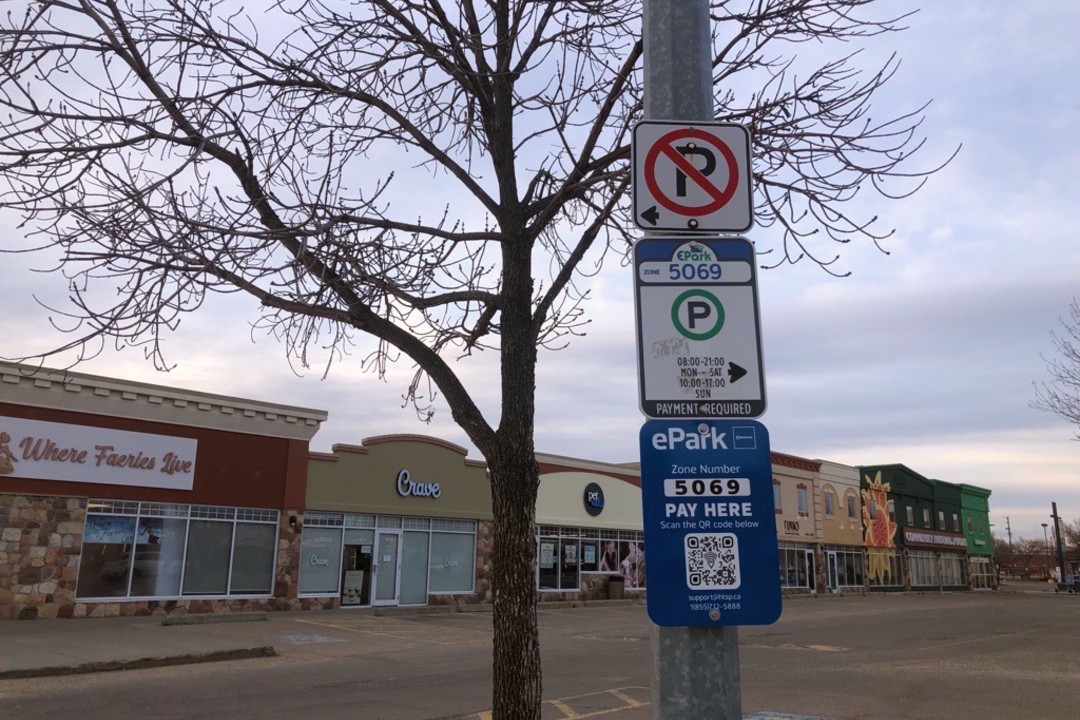
City of Edmonton administration plans to make changes to city-owned parking facilities. (Stephanie Swensrude)
Here are some more key items:
- Administration has prepared an updated safe mobility strategy that it says focuses on the highest risk locations across the transportation network. The strategy, described in a report that will be presented to urban planning committee, introduces three programs to align responses with context. Neighbourhood safety will focus on managing speed, reducing conflicts, and supporting active transportation. School safety will focus on areas with peak periods of high pedestrian activity and vehicle congestion through measures tailored to each site. Arterial and intersection safety will address corridors and intersections where the most severe collisions occur. Council can fund a status-quo implementation with about $74 million in capital funding over four years, or a full implementation with $150 million in capital funding over four years and about $5.5 million annually in operating costs.
- Councillors will now receive more information when asked to approve the creation of a statutory plan, which is the first step toward building a new suburb. In January, council was asked to approve the creation of a neighbourhood structure plan for Kettle Lakes, and some councillors questioned whether they knew enough to make an informed decision. Administration has updated the terms of reference for statutory plans, and it will now include the percentage of developed land in surrounding neighbourhoods, the general direction and staging of development in the area, the location of key infrastructure connections, land development application trends nearby, and the area's integrated infrastructure master plan.
- Urban planning committee will review speed limit changes for dozens of sections across the city. If approved, the changes will create new playground or school zones, slow down vehicles next to new active transportation infrastructure, and align existing roads with new roads that developers have built.
- Administration received two applications for the ArtsCommon 118 site and has chosen a preferred proponent, said a report that will be presented to executive committee on June 10. The proposed plans for the site are laid out in a private report. The city listed the site for sale nearly a year ago following a failed development attempt by the Edmonton Community Development Company.
- Administration said it will create intermunicipal collaboration frameworks (ICFs), and in some cases intermunicipal development plans (IDPs), with eight neighbouring municipalities, as required by the Municipal Government Act after the Edmonton Metropolitan Region Board was dissolved. ICFs enable municipalities to work together to efficiently deliver services, while an IDP is a statutory plan created by neighbouring municipalities to guide growth and development around their shared boundaries. A report set to be presented to urban planning committee said administration has determined that IDPs are not needed with Devon or Fort Saskatchewan because shared boundaries are limited. Because IDPs are statutory plans, city staff requires council's approval to begin work on them, and the city is mandated to engage the public and hold a public hearing. Engagement will begin in 2027, the report said.
- Councillors will meet in private to receive instructions for a legal matter.
And here are updates on some of the items we told you about last week:
- Mayor Andrew Knack mused at an infrastructure committee meeting on May 25 that the High Level Bridge replacement might "need to be a mega-bridge" because it could need to accommodate cars, bikes, pedestrians, and a dedicated bus lane. Councillors asked administration to provide a memo with traffic counts, mode shift forecasts, and public transit expansion opportunities, as well as current funding options from other orders of government for bridges. They also asked administration to provide a report on how the replacement projects could be used to simplify the central road network, daylight Mill Creek, and encourage multimodal transportation.
- Council approved changes to the zoning bylaw that mean developers of single-detached, semi-detached, duplex, and row housing must participate in the landscape securities program. The city collects deposits from developers and returns them after they plant the required amount of trees and shrubs on their properties. Gary Hoeft of Cantiro Homes, representing BILD Edmonton Metro, told council the changes would tie up capital for infill developers, hurting an industry the city aims to encourage. Jan Hardstaff of the Residential Infill Working Group said the developers should only receive the deposit once the landscaping is established and healthy.
- Council approved a rezoning application in Balwin and another in Belgravia.
- Council services committee approved a request from Coun. Jon Morgan to add $3,000 to the common travel and conferences budget to attend the Calgary Stampede. It also added $3,000 for Coun. Karen Principe to attend, and increased Coun. Keren Tang's budget for the trip from $2,000 to $3,000.
Meetings stream live on YouTube on the Chamber channel and River Valley Room channel.
For more on civic affairs, including updates on the High Level Bridge replacement, construction impacts on downtown businesses, and a deep dive on infrastructure in the Maple neighbourhood, listen to Episode 359 of Speaking Municipally.
Share