
On the agenda: Annual report from the police service
This week, city council is set to review the Edmonton Police Service's annual report.
The Crime Severity Index, a measure of the number and seriousness of crimes reported to police, was pegged at 107 in 2025, down from 109 the previous year and lower than in any of the five years prior to the COVID-19 pandemic. The index weighs serious crimes such as homicide or sexual assault more heavily than theft or vandalism, for example. At the same time, the total crime rate increased after two years of decline.
The service is shifting to a more proactive model, the report said. "The old call-and-respond model no longer fits the needs of our community," Chief Warren Driechel said in the report's opening message. "We cannot expect sustained progress if we are spending more time responding to crime than preventing it."
One example of proactive policing is Project Unify, where police patrolled the LRT system with transit peace officers in an effort to prevent and intervene in crime and disorder. During the deployment of the teams, there was a 230% increase in crimes reported by police and an 11% decrease in crimes reported by the public at the patrolled transit stations, the report said.
Reports of social disorder decreased by nearly 10% between 2024 and 2025. The report said this reflects "the progress made by federal, provincial and municipal government institutions, EPS, and social sector partners in improving citizens' conditions, supporting victims, and reducing or containing these incidents." However, public drug use and encampments remain top concerns for residents, it said.
An annual survey suggested that confidence in police has declined slightly, with 52% of respondents saying the police are doing a good or excellent job, down from 56% in 2024. The percentage of respondents who feel safe walking alone after dark increased from 65% to 70% in the same time period.
The report noted traffic fatalities increased in 2025, attributing it largely to more vehicle–pedestrian collisions and a rise in motorcycle-involved deaths, alongside contributing risky behaviours such as speeding and impaired driving. The police said it shares traffic fatality trends with the City of Edmonton's safe mobility team, which leads Vision Zero initiatives such as roadway changes, public engagement campaigns, and pedestrian safety measures. EPS supports this work with targeted enforcement, the report said.
Council will review the report on May 19 in the afternoon. Other reports to be considered include recommendations from council committees on tax forgiveness, municipal historic resource designation, and council's policy for supporting vulnerable people during extreme weather conditions.
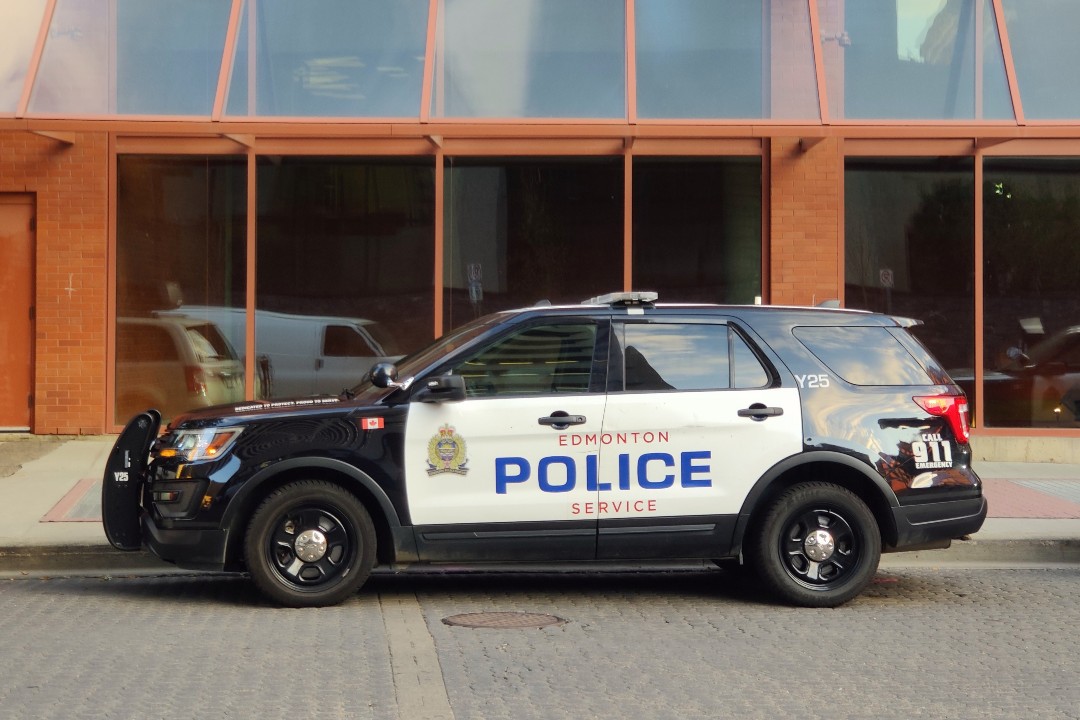
City council will review the Edmonton Police Service's annual report at a meeting on May 19. (Mack Male/Flickr)
Here are updates on some of the items we told you about last week:
- Councillors on the community and public services committee reviewed an updated policy on supporting vulnerable people during extreme weather conditions on May 11. Committee supported a motion from Coun. Erin Rutherford asking that administration provide funding options for increasing extreme weather supports and adjusting the temperature thresholds, possibly to -15C in winter. If changes can be made "that can save people's lives or save people's limbs," they should be considered, she said. Council will vote on the funding options when it deliberates the budget in the fall. In the same committee meeting, Coun. Jon Morgan, who used to be a transit driver, said he was having trouble accepting that city employees are not permitted to administer naloxone. "All I'm hearing is that it's a training issue and there's a little bit of a worry about liability … I think these are solvable problems." Committee supported his motion calling for a report about expanding naloxone training opportunities for staff who want it.
- Urban planning committee supported bringing forward an unfunded service package for replacing the city's aging bus fleet. Councillors supported the highest level of investment laid out in administration's report, which would see the city spend $386.9 million to replace 300 buses over four years, eliminating the need for some refurbishment work. The funding still requires council approval at the 2027-2030 budget deliberations in the fall.
- Coun. Anne Stevenson said she was worried about Edmonton Transit Service revenue going into a "death spiral" if the city adopts a cost-recovery model for fares and other user fees, as laid out in a report presented to executive committee on May 13. "What I'm hearing is we increase transit fares, or we reduce service — if we do those two things ... do we get to a point where we are increasing prices, which drives down usership, which drives down revenues further?" Transit fares currently recover about 23% of the cost of delivering the service, administration said. The cost-recovery model will be further discussed before budget deliberations in the fall.
Meetings stream live on YouTube on the Chamber channel and River Valley Room channel.
For more on civic affairs, including Mayor Andrew Knack's first State of the City address, a call for municipal employees to return to work, and the provincial government's desire to remove bike lanes, listen to Episode 356 of Speaking Municipally.
Share