Edmonton city council sunsets seven advisory boards
Edmonton city council has moved to conclude the work of seven boards that advise it on issues ranging from climate change to military contributions to local history.
The change indicates a need to modernize how city council hears from diverse groups, not a desire to stop listening to them, Mayor Andrew Knack said.
"It's not that you're stopping hearing from those voices," he told reporters on April 23. "It's how you're doing it, because a lot of these systems have been in place for decades, and it is time that we … reimagine how we're doing this work."
On March 25, council met in private and decided to sunset the Anti-Racism Advisory Committee (which was paused in 2023), the Edmonton Historical Board, the Edmonton Salutes Committee, the Edmonton Transit Service Advisory Board, the Energy Transition Climate Resilience Committee, the Women's Advisory Voice of Edmonton Committee (WAVE), and the City of Edmonton Youth Council.
On April 28, council is slated to vote on bylaws that will officially conclude the tenure of these boards. If passed, the first six will wrap up on April 30, and the City of Edmonton Youth Council will finish up on Aug. 31. The reports accompanying the bylaws say the decision was made in private so administration could tell the committee members ahead of a public announcement.
The decision is "both short-sighted and ill-timed," members of WAVE said in an emailed statement. "Too often, women and gender-diverse people are silenced or sidelined in shaping policy. WAVE challenged that reality, and its removal reinforces these inequities and eliminates a safe, arm's-length space for equity-seeking communities to engage with council."
Some members of WAVE have formed an independent advocacy collective called People's Advocacy Voice of amiskwaciwâskahikan, or PAVA, to replace what has been lost. "We remain committed to making Edmonton a more equitable, safe, and vibrant city for women and gender-diverse people, and to ensuring those voices continue to shape municipal decisions," spokesperson Sarah Dharshi told Taproot.
Knack said he understands why some are unhappy with the decision, but expressed a desire to continue to hear from a diverse range of Edmontonians. "I think a lot of these voices are going to want to continue to be a part of shaping the city, providing policy recommendations, providing guidance on these pieces," he said. "We need those voices who have so much knowledge and so much to offer to be able to help shape the city in the most meaningful way possible."
Melanie Hoffman, former co-chair of the Energy Transition Climate Resilience Committee, told Taproot she was confused, shocked, and angry when she heard the committee would be shut down. She said the committee was useful because it allowed passionate volunteers to have direct input into administration at a level that the public does not typically have access to.
"The co-chairs of this committee spend hours reviewing 40 to 60 applications every year of people who are interested to be able to volunteer their expertise to council — council then gets to select those people, and then those people get access to administration," she said. "I'd love to hear how being on the outside of that machine is going to make administration better at bringing forward climate action."
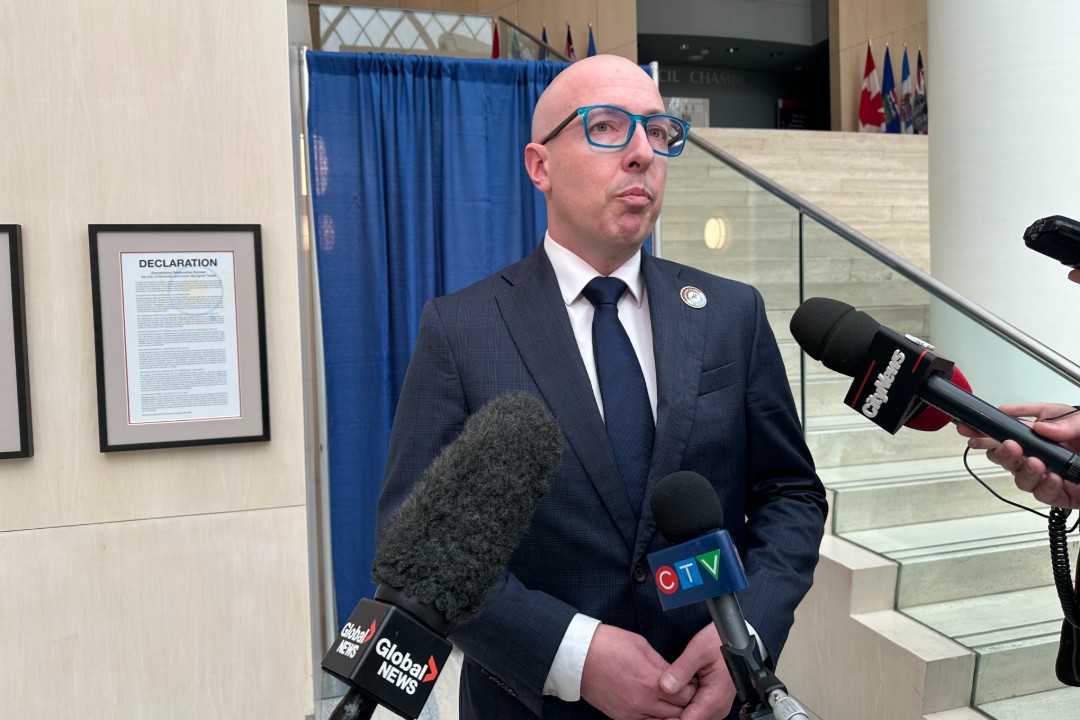
Edmonton Mayor Andrew Knack spoke to reporters on April 23 about city council's decision to disband seven boards that advise city council on matters such as the climate, racism, and women's issues. (Stephanie Swensrude)
She added that regular life keeps people busy, and these boards were supposed to provide input on behalf of all Edmontonians.
"I feel like the mayor is literally just saying, 'Okay, you 15 experts that have been volunteering your time on this committee, we would prefer that you go and mobilize a million Edmontonians on climate, because we're not going to do it,'" she said.
Some of the committees have been around for decades — Knack noted that the City of Edmonton Youth Council, which he sat on for eight years, has been around for "almost as long as I've been alive." That could mean that such a mechanism for engaging with the public is now outdated, he said, especially when it comes to bringing in youth voices. He suggested that bodies such as the Edmonton Student Alliance or the Student Senate at Edmonton Public Schools might be better conduits.
The decision is not motivated by a desire to get rid of diversity, equity, and inclusion, he said.
"We need to absolutely continue to embrace diversity, equity, and inclusion," he said. "We cannot shy away from it, because, in fact, we're in a world now that seems to be shying away from it, and that's concerning."
It's also not about saving money, he said. "It's about making sure we're restructuring and reimagining how we continue to hear from a variety of voices across the city, recognizing that there's a lot of work to do, and we want to bring in more voices into the city, too."
Five other committees remain: the Edmonton Design Committee, the Accessibility Advisory Committee, the Edmonton Combative Sports Commission, the Community Services Advisory Board, and the Naming Committee. Council will meet in private on April 28 to receive governance updates from those committees.
The changes come after council approved a new Governance Framework for Council Committees, which aims to ensure every committee serves a clear and necessary purpose, aligns with current council priorities, and adds value that is not provided elsewhere. Henceforth, committees will be reviewed at the beginning of each council term and can be established, renewed, restructured, or sunsetted based on the new framework's criteria. The city had been recruiting for various civic agencies, including some of the ones that are ending, as recently as January 2026.
Hear more about the decision on Episode 353 of Speaking Municipally, which will be live at noon on April 24.
Share